Peptide-Adjacent
CAS
303760-60-3
Molecular Weight
400
Da
A synthetic small-molecule pan-agonist of estrogen-related receptors (ERRα, β, γ) developed at Saint Louis University. Among the most discussed exercise mimetics in current research, SLU-PP-332 activates the same mitochondrial and metabolic gene programs triggered by aerobic exercise, in preclinical models only. No human trials completed. Research compound only.
Oral
Intranasal Suitable
No
Research Compound
We break down one compound like this every week.
Subscribe free to The Honest Dose, and get the RQS Reference, every compound in the catalog scored on one page, as a welcome gift.
Community signal is minimal and almost entirely theoretical. SLU-PP-332 is so new that personal experience reports are rare even on the most research-forward forums. Discussion is primarily driven by the 2023 and 2024 animal research papers (the "exercise in a pill" framing generated mainstream media coverage) rather than personal use data. r/Longevity and r/Biohackers contain speculative threads about human application. The few users who discuss personal use typically acknowledge they are early adopters operating with minimal human pharmacokinetic data. ERR agonism and mitochondrial biogenesis are the mechanisms discussed. Community interest is genuine but appropriately cautious given the compound's research stage.
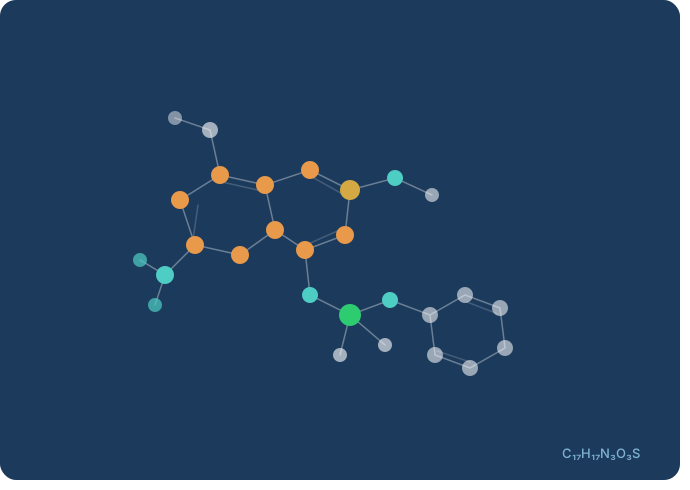
SLU-PP-332 is a synthetic small molecule developed by researchers at Saint Louis University School of Medicine as a tool for studying estrogen-related receptor (ERR) signaling. It is not a peptide in the traditional sense but falls within the peptide-adjacent class of research compounds alongside others in this catalog such as Turkesterone and Ibutamoren. ERRα, ERRβ, and ERRγ are orphan nuclear receptors, meaning no natural endogenous ligand has been identified, that regulate mitochondrial biogenesis, oxidative phosphorylation, and cellular energy homeostasis. SLU-PP-332 binds all three with preferential potency at ERRα (EC50 = 98 nM). Its popular nickname as an "exercise mimetic" reflects preclinical findings showing it activates many of the same gene expression programs engaged during aerobic exercise, without physical activity.
SLU-PP-332 binds and activates ERRα, ERRβ, and ERRγ, stabilizing them in their active conformation and driving downstream transcription of genes involved in oxidative metabolism, mitochondrial biogenesis, and fatty acid oxidation. ERRα in particular regulates PGC-1α-dependent programs, the same pathways engaged during endurance training. In skeletal muscle cell lines, SLU-PP-332 increases mitochondrial function and cellular respiration. In mouse models, it shifts skeletal muscle fiber composition toward type IIa oxidative fibers, increases capillary density, and enhances endurance capacity in an ERRα-dependent manner. Separately, ERR activation increases resting energy expenditure and fatty acid oxidation while decreasing fat mass accumulation without appetite suppression.
All use cases for SLU-PP-332 are preclinical. Rodent studies have demonstrated improved endurance performance, increased oxidative muscle fiber density, reduced fat mass in diet-induced obese models, improved insulin sensitivity, and restored mitochondrial function in cardiac failure models. A 2024 study published in the Journal of Pharmacology and Experimental Therapeutics showed meaningful metabolic improvements in both diet-induced obese and ob/ob mouse models. Researchers have also investigated potential applications in age-related muscle atrophy, heart failure, and kidney fibrosis. No human efficacy or safety trials have been published as of 2026.
No human safety data exists. Preclinical studies have not identified prominent adverse effects at research doses, but the complete safety profile in humans is unknown. Because ERRs are nuclear receptors involved in reproductive biology and broader transcriptional regulation, off-target effects cannot be ruled out without human trials. Research compound only, not approved for human use.
Available from research chemical suppliers in oral capsule form (500mcg–20mg) and as lyophilized powder. Not available through any legitimate pharmaceutical or compounding channel for human use. All available formulations are designated for laboratory research only.
Not approved by the FDA or any equivalent regulatory body for human use. Not on the 503A bulk drug substances list. No IND filing or active clinical trial pipeline publicly registered as of 2026. Sold by research chemical vendors for laboratory use only.
https://pmc.ncbi.nlm.nih.gov/articles/PMC10801787/
https://pubmed.ncbi.nlm.nih.gov/41421047/
https://pmc.ncbi.nlm.nih.gov/articles/PMC13112601/
Enjoyed this profile? Get one compound broken down in depth every week in The Honest Dose.
Last Reviewed