Peptide-Adjacent
CAS
41451-87-0
Molecular Weight
521
Da
A naturally occurring plant-derived ecdysteroid extracted from Ajuga turkestanica, popularized in the fitness community since 2021 as a natural alternative to anabolic steroids. Does not appear to bind androgen receptors — meaning it works differently from traditional anabolic compounds and is not expected to cause hormonal suppression. Human evidence base is currently very limited and does not match the boldness of mainstream fitness claims. OTC supplement, widely available, no prescription required.
Oral · Powder
Intranasal Suitable
No
OTC Supplement
We break down one compound like this every week.
Subscribe free to The Honest Dose, and get the RQS Reference, every compound in the catalog scored on one page, as a welcome gift.
Community signal is high-volume but increasingly skeptical. Turkesterone had a significant hype cycle driven by fitness influencer promotion in 2021-2022, and the community consensus has since moderated considerably. r/Supplements and r/nattyorjuice contain extensive critical discussion of whether the muscle-building claims hold up against user experience. Early enthusiastic reports have been followed by a wave of "didn't work for me" threads. The community is broadly aware that human RCT evidence is thin and that most of the research is animal-based. Users who report positive outcomes frequently also made dietary and training changes during their Turkesterone use, raising attribution questions the community itself often acknowledges.
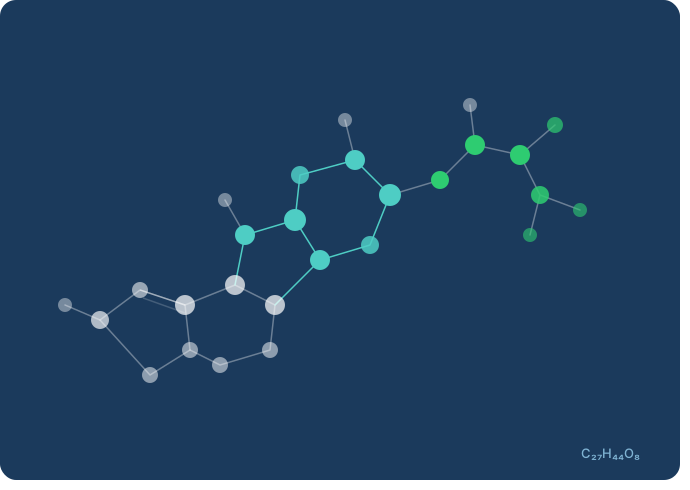
Turkesterone is a naturally occurring ecdysteroid, a class of steroid hormones found in plants and insects, extracted primarily from the Central Asian plant Ajuga turkestanica, from which it takes its name. It belongs to the same family of compounds as ecdysone and 20-hydroxyecdysone, which regulate molting and development in insects. Turkesterone has gained significant popularity in the natural bodybuilding and fitness community since approximately 2021 as a purportedly natural alternative to anabolic steroids, with claims of muscle building and performance enhancement circulating widely on social media. It is important to note upfront that the human evidence base for Turkesterone is currently very limited and does not match the boldness of claims made in mainstream fitness content.
The exact mechanism of Turkesterone in humans is not fully established. In insects ecdysteroids bind to ecdysone receptors to regulate gene expression. In mammals including humans, ecdysteroids do not appear to bind to androgen receptors, meaning Turkesterone does not work like a traditional anabolic steroid and should not cause testosterone suppression or related hormonal side effects. Research suggests it may work through estrogen receptor beta activation, stimulation of muscle protein synthesis via PI3K/Akt signaling pathways, and potential adaptogenic effects on cortisol regulation. However these mechanisms are largely derived from in vitro and animal studies, human mechanistic data is essentially absent.
Turkesterone is marketed primarily for lean muscle mass development, strength gains, improved recovery, and body composition improvement. Animal studies and limited in vitro research suggest potential anabolic activity. One small human study, often cited as primary evidence, showed improvements in muscle mass and strength, but was conducted with significant methodological limitations. The fitness community's enthusiasm for Turkesterone has outpaced the scientific evidence considerably. It is used most commonly by individuals seeking natural performance enhancement without the hormonal risks associated with traditional anabolic steroids or prohormones.
Turkesterone's risk profile in humans is poorly characterized due to limited research. Reported side effects from user communities include nausea and gastrointestinal discomfort particularly when taken without food, and headaches during initial use. Because it does not appear to bind androgen receptors, testosterone suppression and estrogenic side effects associated with anabolic steroids are not expected, however this has not been rigorously confirmed in long-term human studies. Unknown long-term effects. Individuals with hormone-sensitive conditions should exercise caution given its activity at estrogen receptor beta. Not recommended during pregnancy. Quality and purity of commercial supplements varies enormously, adulteration and mislabeling are documented concerns in this category.
Oral capsules and powder. Widely available as an OTC dietary supplement through mainstream supplement retailers and online. Typically standardized to a percentage of Turkesterone content, look for products with third party COA verification as adulteration is common. No injectable form. No prescription required.
OTC dietary supplement in the United States. Regulated under DSHEA. Not FDA approved as a drug. Not currently on WADA's prohibited list — making it technically permissible in competitive sports, though athletes should verify with their specific governing body as regulations evolve. Significantly easier to access than most compounds in this catalog.
https://pmc.ncbi.nlm.nih.gov/articles/PMC4447764/
https://pubmed.ncbi.nlm.nih.gov/31123801/
https://pubmed.ncbi.nlm.nih.gov/17065383/
Ibutamoren, Creatine, 20-Hydroxyecdysone
Enjoyed this profile? Get one compound broken down in depth every week in The Honest Dose.
Last Reviewed