The Full Catalog
55 compounds. Evidence graded, mechanism explained, risks disclosed. No sponsorships. No agenda.
Category
Evidence Grade
Showing all 55 compounds
Foundational SupplementsHuman RCT

Creatine
Creatine Monohydrate
93
Creatine
Creatine Monohydrate
The most extensively researched performance supplement in existence with over 500 peer-reviewed studies. Increases muscle phosphocreatine stores to extend high intensity exercise capacity, accelerate strength gains, and support lean muscle development. Emerging evidence supports cognitive and neuroprotective benefits. Exceptionally safe profile validated across decades of research.
StatusOTC Supplement
FormsOral · Powder
View Full Intel →
Foundational SupplementsHuman RCT

L-Carnitine
Levocarnitine · Carnitine
93
L-Carnitine
Levocarnitine · Carnitine
A naturally occurring amino acid derivative first discovered in 1905, found in highest concentrations in red meat and synthesized endogenously from lysine and methionine. Plays a central role in transporting long-chain fatty acids into mitochondria for energy production. One of the most extensively studied supplements in existence, with dozens of meta-analyses aggregating hundreds of RCTs. OTC with an established safety record. Weight-loss and exercise effects are real but modest in healthy adults.
StatusOTC Supplement
FormsOral · Capsule · Powder · IV
View Full Intel →
MetabolicHuman RCT
GLP-1
GLP
94
GLP-1
GLP
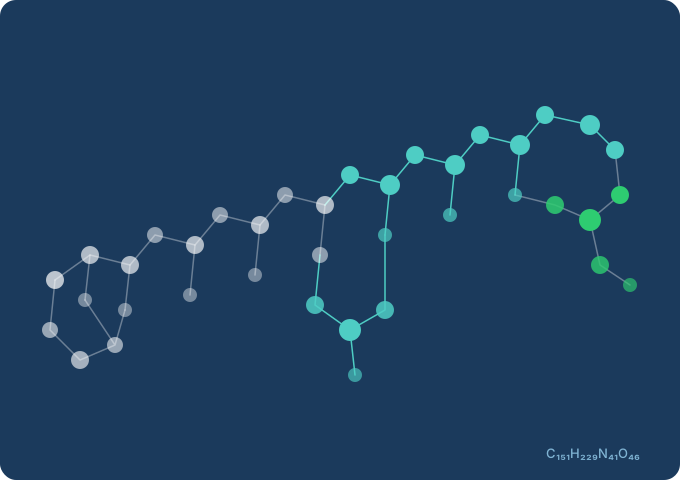
A naturally occurring hormone whose synthetic analogs — including semaglutide (Ozempic, Wegovy) and liraglutide — have become among the most prescribed medications in the world. FDA approved with an extensive clinical evidence base. Works by stimulating insulin release, suppressing appetite, and slowing gastric emptying. Requires a prescription through a licensed provider.
StatusPrescription
FormsInjectable · Oral
View Full Intel →
MetabolicHuman RCT
Tirzepatide
Mounjaro · Zepbound
91
Tirzepatide
Mounjaro · Zepbound
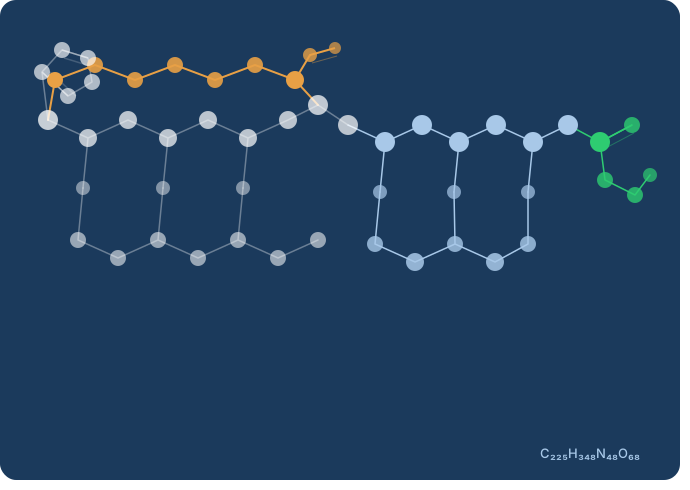
A once-weekly injectable dual hormone receptor agonist targeting both GIP and GLP-1 receptors simultaneously. FDA approved for type 2 diabetes (Mounjaro) and chronic weight management (Zepbound). The SURMOUNT trial program demonstrated up to 20.9% body weight loss — outcomes previously associated only with bariatric surgery. Prescription only.
StatusPrescription
FormsInjectable
View Full Intel →
MetabolicHuman RCT
Retatrutide
Reta or Triple G
77
Retatrutide
Reta or Triple G
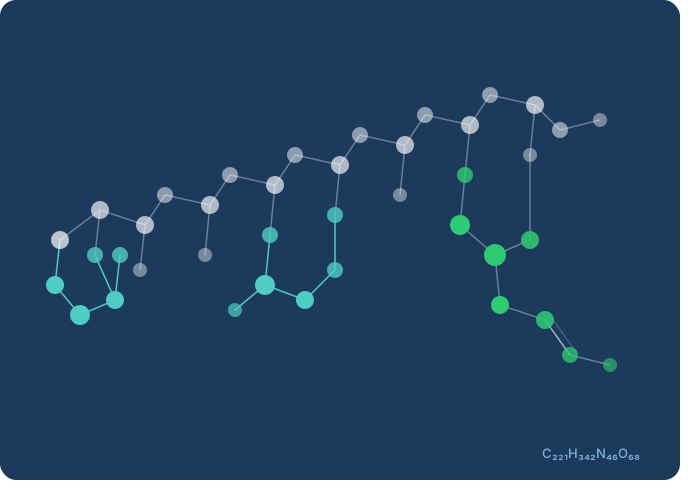
The most advanced peptide in active clinical development on PeptideClear. A triple hormone receptor agonist targeting GLP-1, GIP, and glucagon receptors simultaneously — producing weight loss results in Phase II trials (~24% body weight) that exceed both semaglutide and tirzepatide. Currently in Phase III trials with Eli Lilly. PeptideClear is actively tracking its path to approval.
StatusEmerging / Clinical Trial
FormsInjectable
View Full Intel →
MetabolicHuman RCT
Tesamorelin
Egrifta
88
Tesamorelin
Egrifta
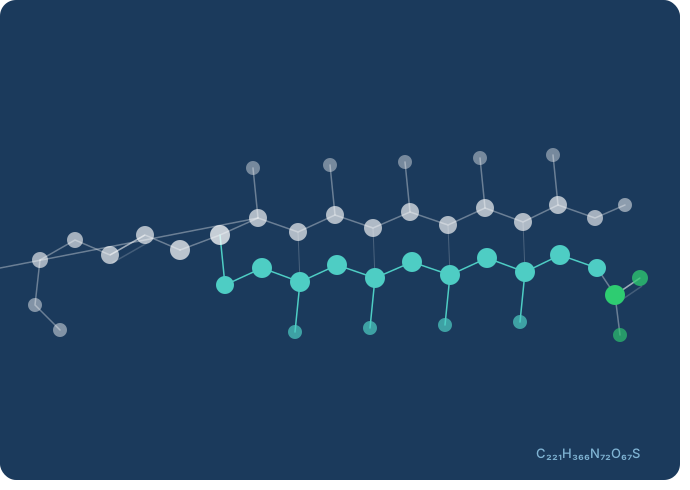
A synthetic analog of Growth Hormone Releasing Hormone and the only GHRH analog with an FDA-approved indication. Approved under the brand name Egrifta for visceral fat reduction in HIV patients with lipodystrophy. Widely used off-label in longevity and metabolic health contexts for targeted visceral fat reduction and emerging cognitive benefits. Prescription only.
StatusPrescription — FDA Approved
FormsInjectable
View Full Intel →
MetabolicHuman RCT
Cagrilintide
Cagri
68
Cagrilintide
Cagri
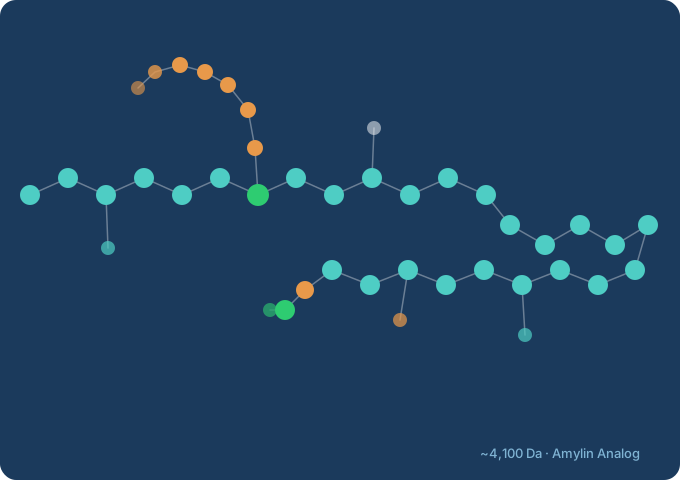
A long-acting amylin analog developed by Novo Nordisk for once-weekly injection. Mimics amylin, a pancreatic hormone that regulates appetite and slows gastric emptying. Being developed primarily in combination with semaglutide (CagriSema) for obesity and type 2 diabetes. Phase II data is robust — the CagriSema combination showed 15-22% weight loss over 32 weeks. Phase III underway. Not yet approved.
StatusEmerging / Clinical Trial
FormsInjectable
View Full Intel →
MetabolicHuman RCT
Survodutide
BI 456906
67
Survodutide
BI 456906
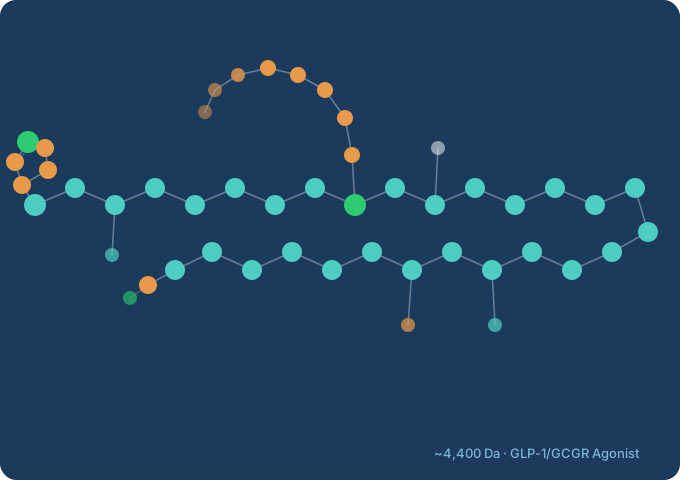
Survodutide is a dual glucagon/GLP-1 receptor agonist developed by Boehringer Ingelheim. It is currently in Phase II/III clinical trials for obesity and non-alcoholic steatohepatitis (NASH/MASH). Unlike tirzepatide (GIP/GLP-1) and retatrutide (GIP/GLP-1/glucagon), survodutide combines GLP-1 and glucagon receptor activation, a mechanism that targets both appetite and hepatic fat metabolism. Phase II results showed meaningful weight loss; Phase III is ongoing. Not yet approved.
StatusEmerging / Clinical Trial
FormsInjectable
View Full Intel →
MetabolicObservational
AOD-9604
hGH Fragment 176-191
33
AOD-9604
hGH Fragment 176-191
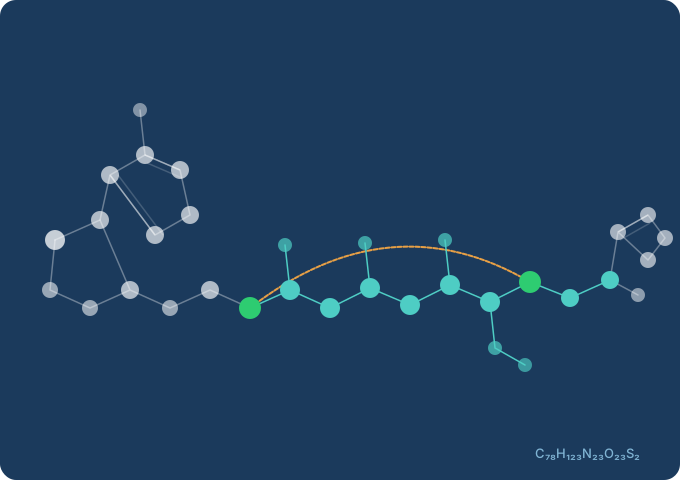
A synthetic 16 amino acid peptide fragment derived from the C-terminal domain of human growth hormone. Originally developed as an anti-obesity drug. Despite completing six human clinical trials involving over 900 participants, AOD-9604 failed to achieve statistical significance in its largest Phase IIb trial. Increasingly studied for cartilage repair. No regulatory approval.
StatusResearch Compound
FormsInjectable
View Full Intel →
Growth HormoneHuman RCT
Sermorelin
Serm
64
Sermorelin
Serm
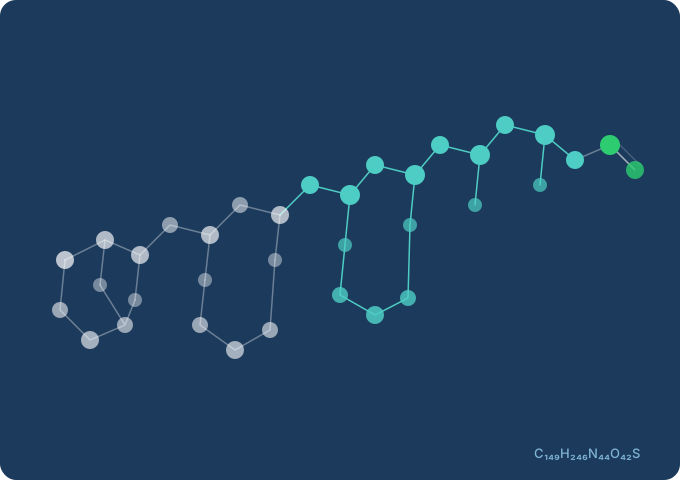
A synthetic analog of the body's natural Growth Hormone Releasing Hormone (GHRH), comprising its first 29 amino acids. The only peptide in this catalog with prior FDA approval history, previously prescribed for pediatric growth hormone deficiency. Available through licensed compounding pharmacies by prescription. Stimulates the pituitary to produce growth hormone naturally.
StatusPrescription
FormsInjectable
View Full Intel →
Growth HormoneAnimal Only
Ipamorelin
IPA
35
Ipamorelin
IPA
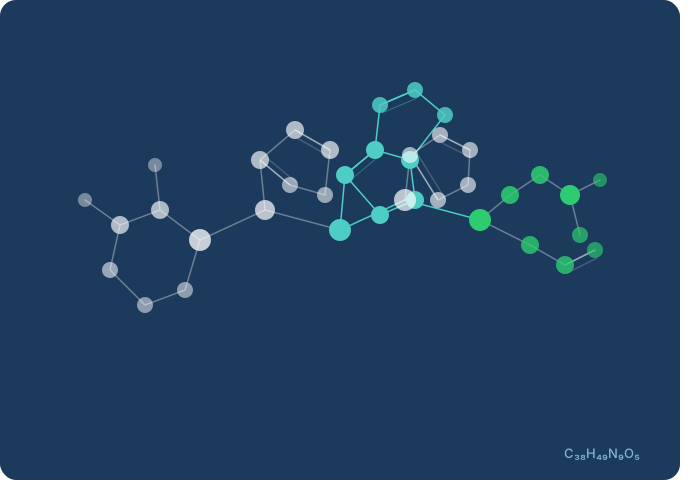
A selective synthetic peptide that stimulates growth hormone release from the pituitary gland without significantly affecting cortisol or prolactin. One of the most popular peptides in longevity and performance protocols due to its clean hormonal profile. Has reached human clinical trials. Often combined with CJC-1295 for amplified effect.
StatusResearch Compound
FormsInjectable
View Full Intel →
Growth HormoneObservational
CJC-1295
Modified GRF (1-29) / DAC
44
CJC-1295
Modified GRF (1-29) / DAC
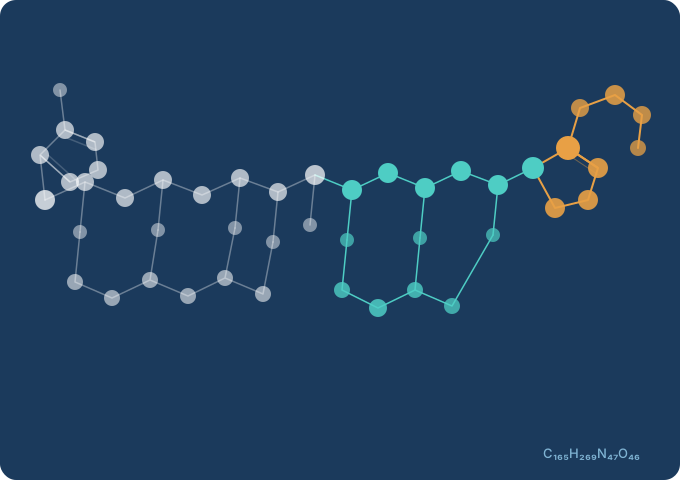
A synthetic analog of Growth Hormone Releasing Hormone and one of the most widely used peptides in the longevity and performance communities. Exists in two distinct forms frequently confused — with DAC (multi-day half-life via albumin binding) and without DAC (similar to Sermorelin). Most commonly combined with Ipamorelin for synergistic GH release. Research compound only.
StatusResearch Compound
FormsInjectable
View Full Intel →
Growth HormoneObservational
Ibutamoren
MK-677
63
Ibutamoren
MK-677
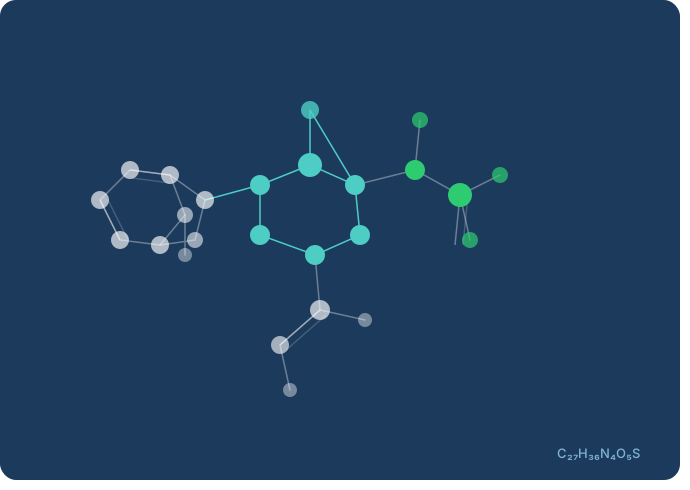
An orally active non-peptide compound that mimics ghrelin to stimulate sustained growth hormone and IGF-1 release. The only compound in this catalog that achieves growth hormone secretagogue effects without injection. Has reached Phase II human clinical trials for muscle wasting and hip fracture recovery. Sold as a research compound, not FDA approved.
StatusResearch Compound
FormsOral
View Full Intel →
Growth HormoneObservational
Hexarelin
Examorelin · GHRP-6 Analog
43
Hexarelin
Examorelin · GHRP-6 Analog
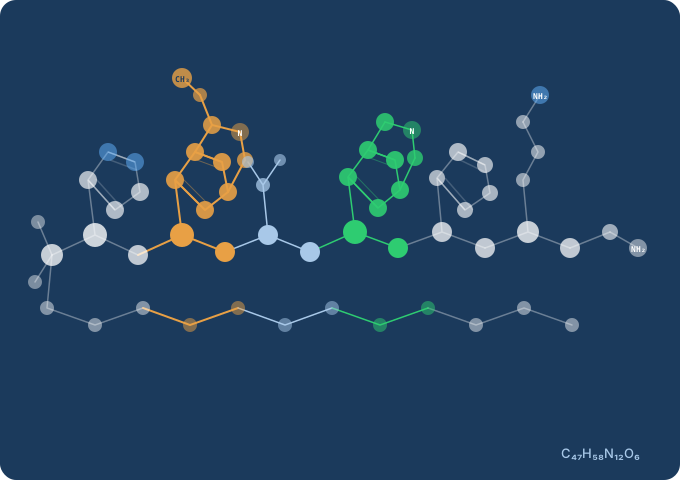
A synthetic hexapeptide and modified derivative of GHRP-6 in which tryptophan was substituted with the more stable 2-methyl-tryptophan. Among the most potent GH secretagogues studied. Distinct from other GH compounds for its cardioprotective mechanism via CD36 receptor activation — independent of GH release entirely. Desensitization with chronic use requires cycling. Research compound only.
StatusResearch Compound
FormsInjectable
View Full Intel →
Growth HormoneAnimal / In Vitro
Follistatin-344
FST-344 / Follistatin
33
Follistatin-344
FST-344 / Follistatin
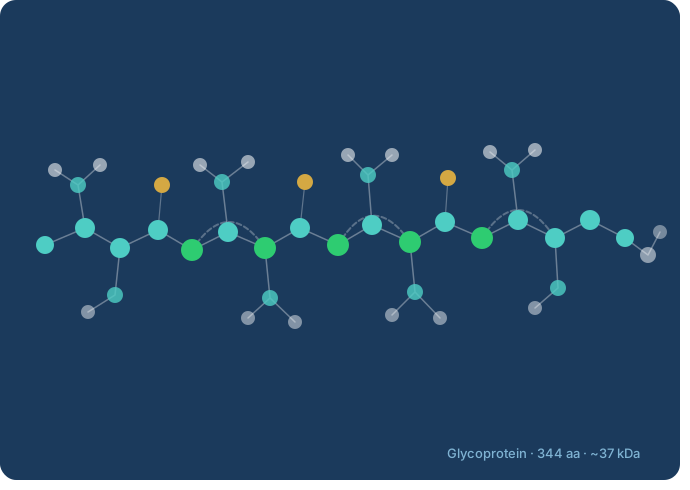
A 344-amino acid glycoprotein that acts as a natural antagonist of myostatin — the body's primary brake on muscle growth. By binding and neutralizing myostatin and activin, Follistatin-344 removes the inhibitory signal on muscle fiber development. Compelling animal data. Early human gene therapy trials for muscular dystrophy only. Not approved for general use.
StatusResearch Compound
FormsInjectable (research)
View Full Intel →
Growth HormoneHuman RCT
HGH
Growth Hormone / Somatropin
90
HGH
Growth Hormone / Somatropin
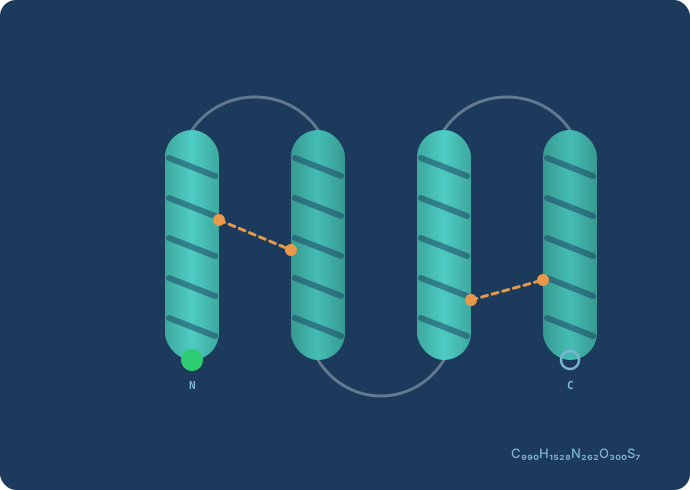
The body's own growth hormone, produced as a recombinant 191-amino-acid protein. FDA approved for specific deficiency and growth disorders, where the evidence is strong. Widely used off-label for anti-aging, fat loss, and performance, where the evidence is far weaker and the legal status is restrictive.
StatusPrescription
FormsInjectable
View Full Intel →
Growth HormoneAnimal / In Vitro

IGF-1 LR3
34
IGF-1 LR3
A lab-engineered, long-acting version of IGF-1, the growth factor HGH works through. Native IGF-1 is a well-studied approved drug; this specific analog is a research reagent with essentially no human trials of its own.
StatusResearch Compound
FormsInjectable
View Full Intel →
Growth HormoneObservational
GHRP-6
Growth Hormone Releasing Peptide-6
47
GHRP-6
Growth Hormone Releasing Peptide-6
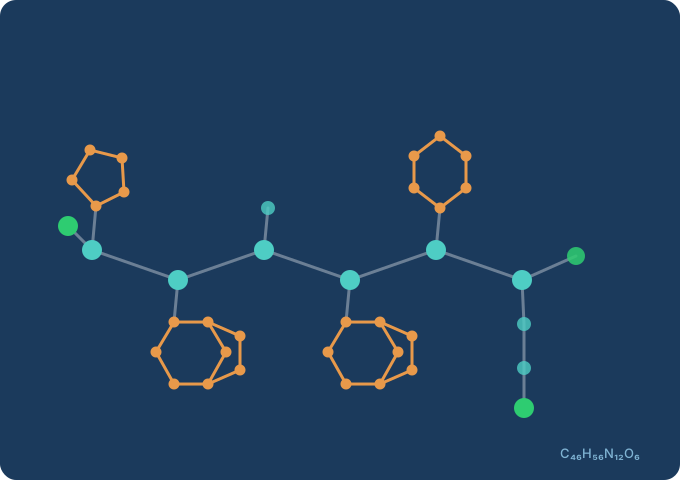
The original growth-hormone-releasing peptide and the template for the entire GHRP family. Well-characterized pharmacology in humans, no therapeutic outcome trials, and the strongest appetite stimulation of any peptide in its class.
StatusResearch Compound
FormsInjectable
View Full Intel →
Growth HormoneObservational
GHRP-2
Growth Hormone Releasing Peptide-2
61
GHRP-2
Growth Hormone Releasing Peptide-2
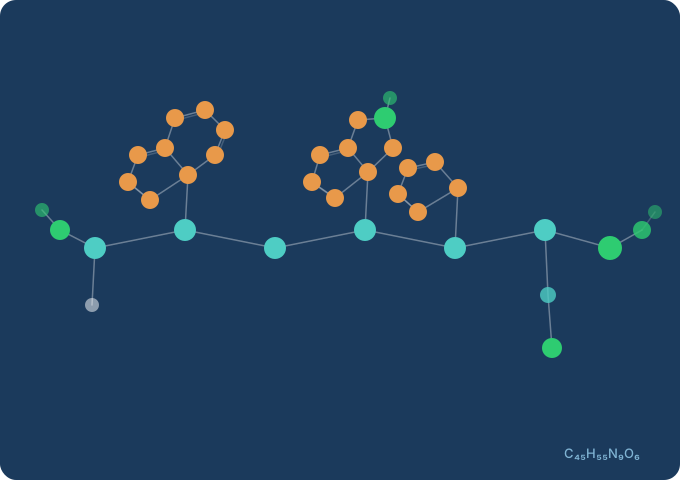
A synthetic hexapeptide ghrelin mimetic that stimulates pituitary growth hormone release. Among the most studied GHRPs with a meaningful human pharmacokinetic evidence base spanning the 1990s-2010s, including replication across multiple independent research groups. Scores higher than its GHRP siblings due to stronger independent replication and funding independence. Approved in Japan as pralmorelin for GH deficiency testing. Stimulates cortisol and prolactin alongside GH — a less selective profile than Ipamorelin.
StatusResearch Compound
FormsInjectable
View Full Intel →
Recovery & PerformanceAnimal Only
BPC-157
Wolverine
20
BPC-157
Wolverine
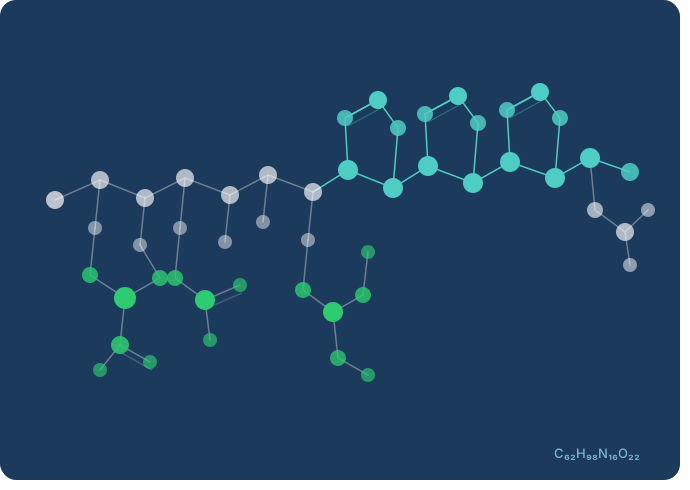
A synthetic peptide studied in animal models for tendon repair, gut healing, and anti-inflammatory effects. Derived from a protein found in gastric juice. Shows remarkable healing properties across tendons, gut lining, and nervous system in animal studies. No human RCT data currently available. Widely used in the research community. Sold as a research compound only.
StatusResearch Compound
FormsInjectable · Oral
View Full Intel →
Recovery & PerformanceAnimal / In Vitro
Pentadeca Arginate
PDA
19
Pentadeca Arginate
PDA
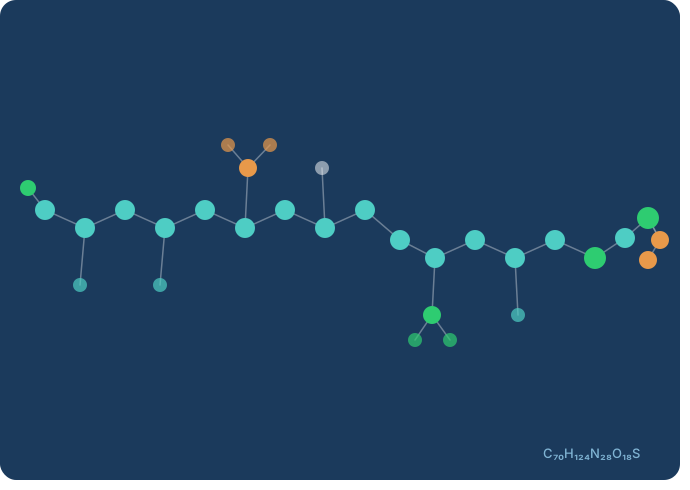
A synthetic 15-amino acid peptide marketed as an upgraded alternative to BPC-157, differing at its C-terminus with an arginine substitution. Entered the market primarily as a regulatory workaround following FDA action against BPC-157 compounding. No published human trials exist. Claims of superiority over BPC-157 are not supported by peer-reviewed evidence. The research base is in its earliest stages.
StatusResearch Compound
FormsInjectable · Oral
View Full Intel →
Recovery & PerformanceAnimal Only
TB-500
TB or Wolverine
41
TB-500
TB or Wolverine
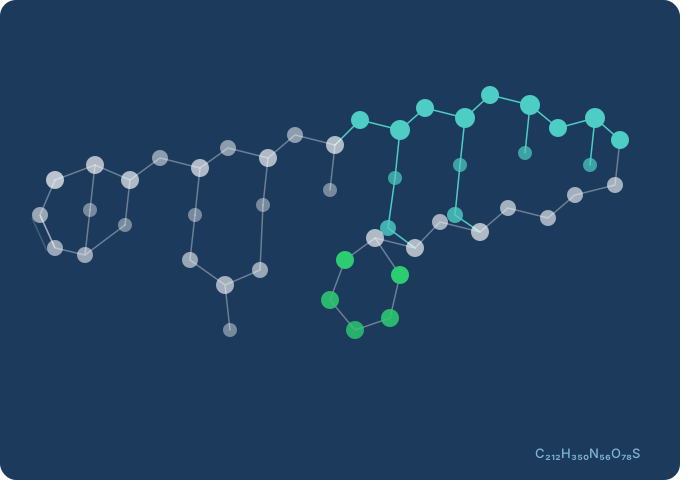
A synthetic peptide derived from Thymosin Beta-4, a protein naturally present in human cells. Studied in animal models for muscle and tendon repair, wound healing, and cardiac tissue recovery. Widely used alongside BPC-157 as a recovery stack in the biohacking community. No human clinical trials completed to date.
StatusResearch Compound
FormsInjectable
View Full Intel →
Recovery & PerformanceAnimal / In Vitro
KPV
Lys-Pro-Val
42
KPV
Lys-Pro-Val
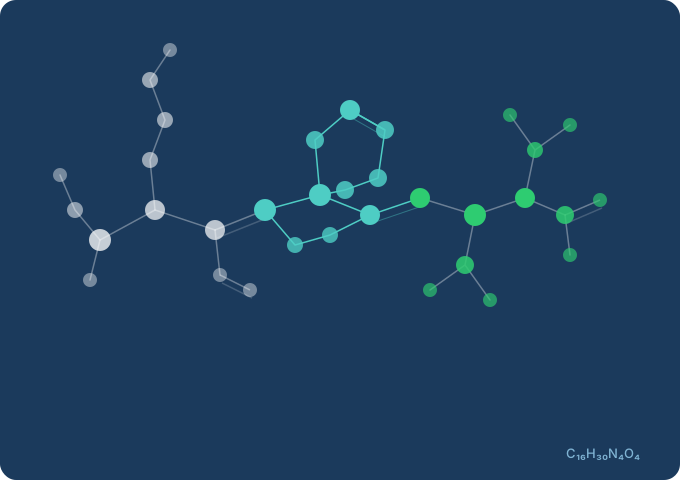
A synthetic tripeptide derived from the C-terminal fragment of alpha-melanocyte stimulating hormone (a-MSH). Unlike most peptides in this catalog which stimulate or build, KPV is primarily a regulator — it quiets overactive inflammatory responses without broadly suppressing immune function. Most studied for gut inflammation, wound healing, and antimicrobial activity. One of the four components of the KLOW recovery stack.
StatusResearch Compound
FormsInjectable · Oral
View Full Intel →
Skin & HairHuman RCT
Palmitoyl Tripeptide-1
Matrixyl
51
Palmitoyl Tripeptide-1
Matrixyl
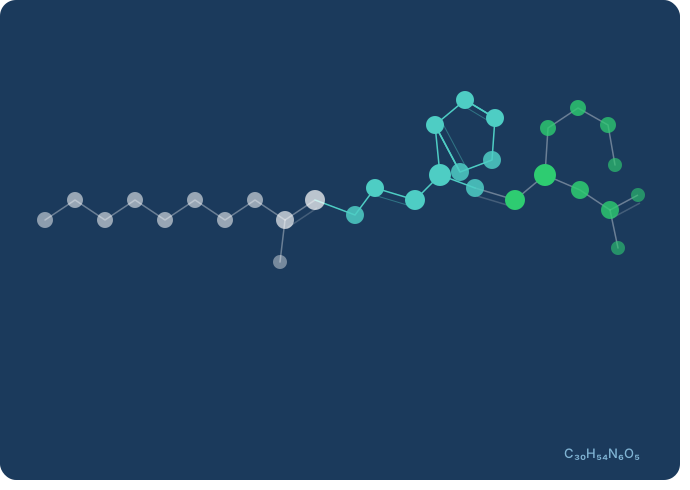
A synthetic peptide commercially known as Matrixyl, purpose-built for skincare. Works as a matrikine, mimicking a collagen breakdown signal that triggers fibroblasts to produce new collagen, elastin, and hyaluronic acid. One of the most widely used and well-studied peptides in the global skincare industry with strong human evidence for wrinkle reduction and skin firmness. Safe for use during pregnancy.
StatusOTC Supplement
FormsTopical · Serum
View Full Intel →
Skin & HairHuman RCT
GHK-Cu
Copper
55
GHK-Cu
Copper
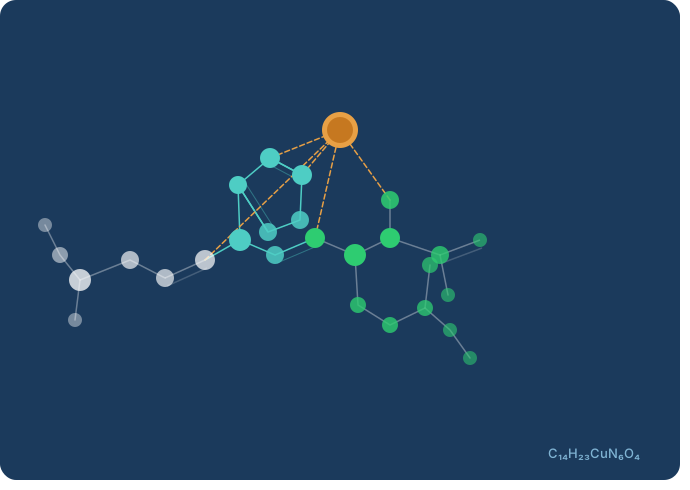
A naturally occurring copper-bound tripeptide first isolated from human plasma in 1973, with levels declining significantly with age. Stimulates collagen and elastin synthesis, promotes wound healing, and demonstrates gene expression resetting properties in aging cells. The only peptide in this catalog that spans both mainstream OTC skincare and the gray zone research community.
StatusOTC Supplement
FormsTopical · Serum
View Full Intel →
Skin & HairHuman RCT
Collagen Type I
Col-I
82
Collagen Type I
Col-I
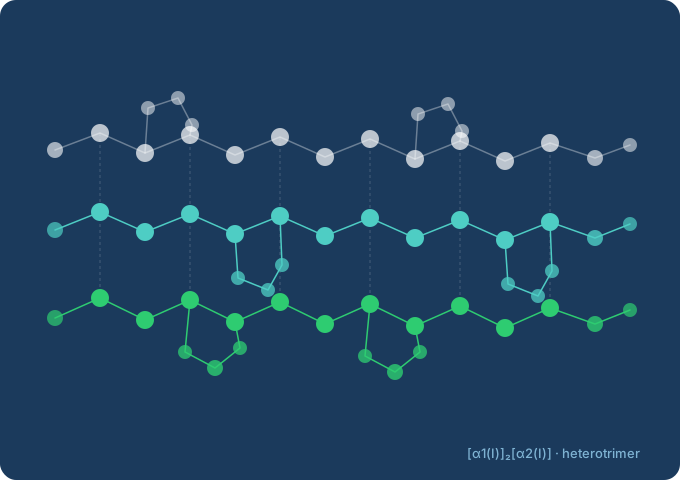
The most abundant protein in the human body and the best-studied peptide supplement in this catalog. Derived from bovine or marine sources and hydrolyzed for absorption. Strong human RCT evidence for skin elasticity, joint comfort, nail strength, and bone density support. Widely available OTC as a powder, capsule, or liquid with an excellent safety profile.
StatusOTC Supplement
FormsOral · Powder
View Full Intel →
Skin & HairHuman RCT
Collagen Type III
Col-III
68
Collagen Type III
Col-III
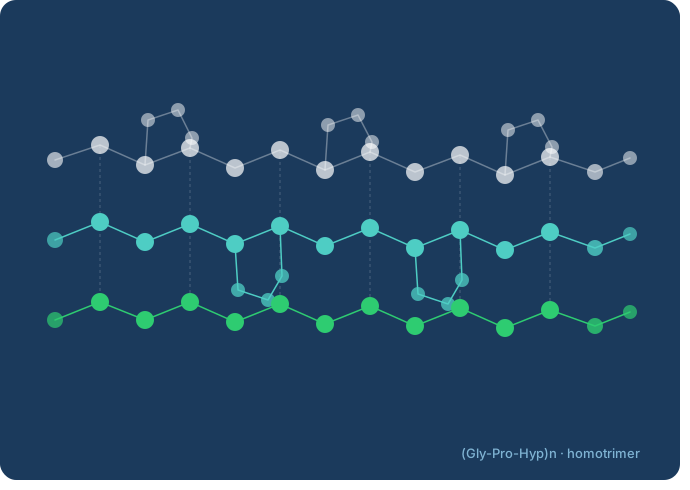
The second most abundant collagen in the body, found alongside Type I in skin, blood vessels, and internal organs. Almost always consumed as part of a Type I and III bovine collagen blend. Supports skin firmness, vascular integrity, and gut lining health. Less independently studied than Type I but shares a robust combined evidence base.
StatusOTC Supplement
FormsOral · Powder
View Full Intel →
Skin & HairHuman RCT
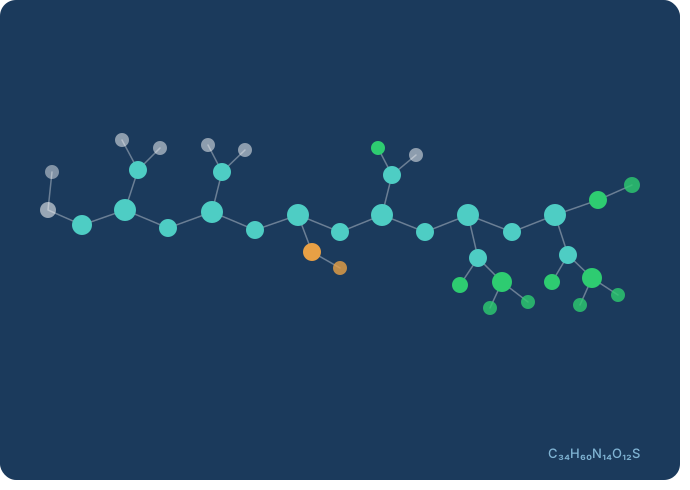
Argireline
Acetyl Hexapeptide-3 / Leuphasyl
48
Argireline
Acetyl Hexapeptide-3 / Leuphasyl
A synthetic hexapeptide that partially inhibits the SNARE complex to reduce facial muscle contractions — marketed as a topical alternative to botulinum toxin. Among the most commercially prevalent cosmeceutical peptides globally. Human RCT evidence exists but is limited in sample size and largely developer-funded. Effect magnitude is significantly weaker than injectable botulinum toxin.
StatusOTC Cosmeceutical
FormsTopical · Serum
View Full Intel →
Skin & HairHuman RCT
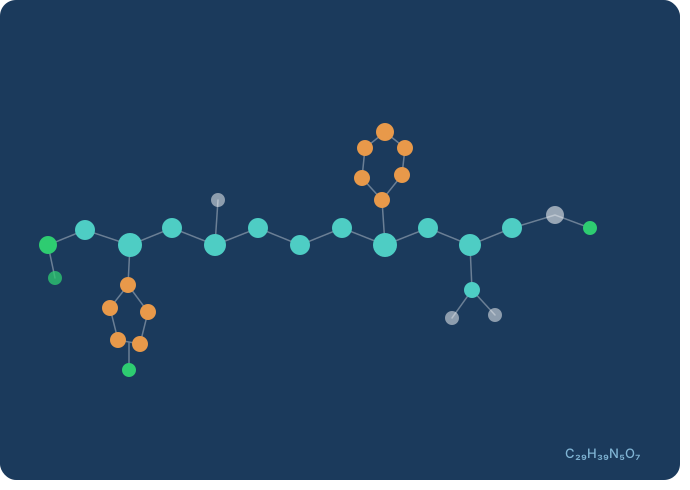
Leuphasyl
Pentapeptide-18 · Argirelox
38
Leuphasyl
Pentapeptide-18 · Argirelox
A Lipotec-developed cosmeceutical pentapeptide that mimics enkephalin activity to dampen nerve signaling at the neuromuscular junction, reducing expression-driven wrinkle depth. Best-evidenced in combination with Argireline (marketed as Argirelox), where the two compounds target the same acetylcholine pathway at distinct binding sites for a synergistic effect. Human evidence exists but is thin and developer-dependent.
StatusOTC Cosmeceutical
FormsTopical · Serum
View Full Intel →
Nootropics & NeuroprotectionObservational
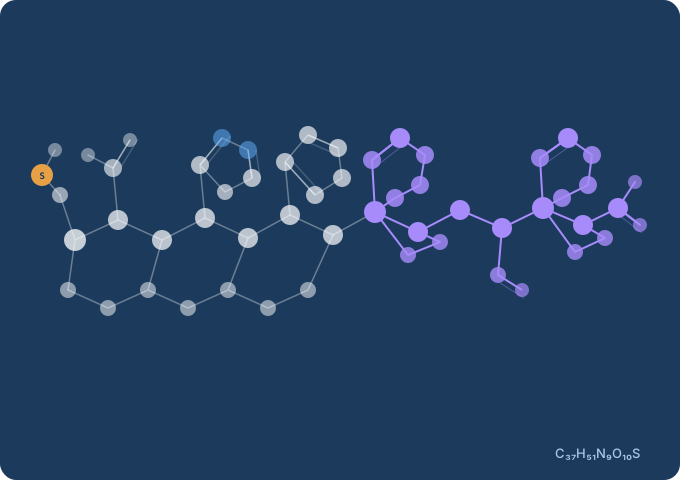
Semax
ACTH 4-7 PGP
42
Semax
ACTH 4-7 PGP
A synthetic heptapeptide derived from the 4-7 fragment of adrenocorticotropic hormone, with a stabilizing Pro-Gly-Pro tail. Developed in Russia in the 1980s. Registered as a prescription medicine in Russia for ischemic stroke and optic nerve disorders. Widely used in the nootropic community for cognitive enhancement, neuroprotection, and focus. Research compound in all Western markets.
StatusResearch Compound
FormsNasal · Injectable
View Full Intel →
Nootropics & NeuroprotectionObservational
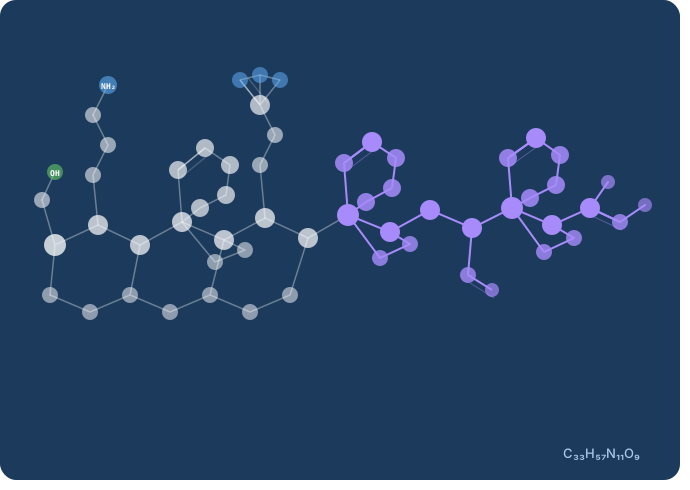
Selank
Tuftsin Analog · TKPRPGP
36
Selank
Tuftsin Analog · TKPRPGP
A synthetic heptapeptide derived from Tuftsin, a naturally occurring tetrapeptide fragment of immunoglobulin G, extended with a Pro-Gly-Pro stabilizing tail. Developed by the same Russian team as Semax. Registered in Russia for anxiety disorders. Demonstrates anxiolytic effects comparable to benzodiazepines without sedation or dependence risk. The calming counterpart to Semax's stimulating nootropic profile.
StatusResearch Compound
FormsNasal · Injectable
View Full Intel →
Nootropics & NeuroprotectionHuman RCT
Cerebrolysin
FPE 1070
62
Cerebrolysin
FPE 1070
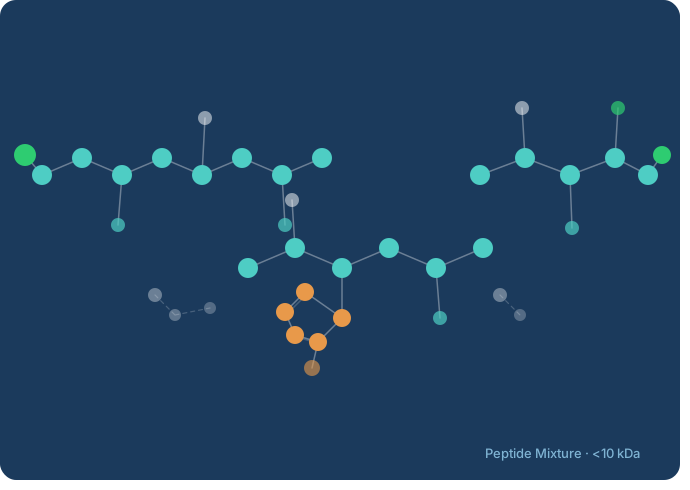
A porcine brain-derived peptide mixture approved in 30+ countries for stroke rehabilitation, traumatic brain injury, and Alzheimer's disease. Contains low-molecular-weight peptide fractions that cross the blood-brain barrier and mimic neurotrophic factors. Multiple RCTs exist, strongest in stroke recovery. Evidence is geographically concentrated in Eastern Europe and China — real but with limited Western independent replication. Not FDA approved.
StatusPrescription — Approved 30+ countries
FormsInjectable
View Full Intel →
Nootropics & NeuroprotectionAnimal / In Vitro
Humanin
HN · HNG
37
Humanin
HN · HNG
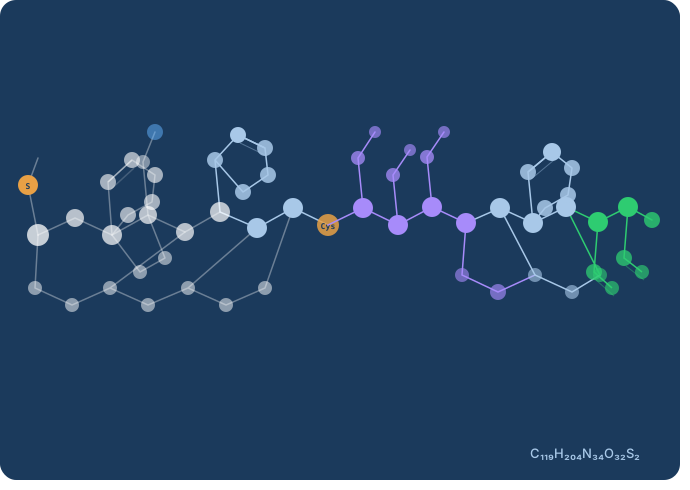
A naturally occurring 24 amino acid peptide encoded by mitochondrial DNA, discovered in 2001 from an Alzheimer's patient's brain. A potent suppressor of neuronal death induced by multiple familial Alzheimer's disease genes. Circulating levels decline with age. Studied for neuroprotection, Alzheimer's disease, cardiovascular protection, and longevity. No human clinical trials completed.
StatusResearch Compound
FormsInjectable
View Full Intel →
Nootropics & NeuroprotectionObservational
DSIP
Delta Sleep-Inducing Peptide
37
DSIP
Delta Sleep-Inducing Peptide
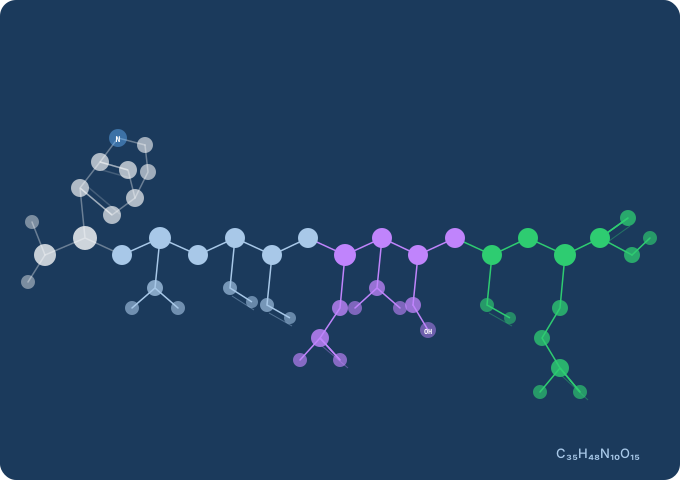
A naturally occurring nonapeptide first isolated from rabbit brain in 1977. Produced in the hypothalamus with marked diurnal variation. A small human study showed intravenous DSIP increased total sleep time by 59% without classical sedation. Studied for slow-wave sleep promotion, GH stimulation, and stroke recovery. The mechanism remains incompletely characterized after nearly 50 years of research.
StatusResearch Compound
FormsInjectable · Nasal
View Full Intel →
Nootropics & NeuroprotectionAnimal / In Vitro
Dihexa
PNB-0408 · N-hexanoic-Tyr-Ile
30
Dihexa
PNB-0408 · N-hexanoic-Tyr-Ile
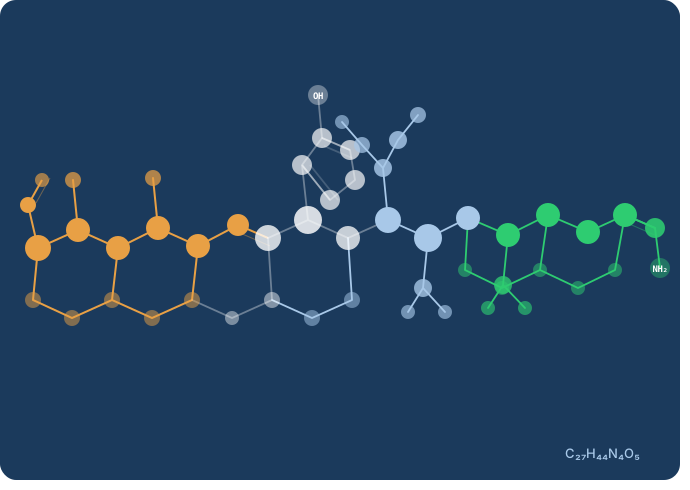
A synthetic analog of angiotensin IV developed at Washington State University. Orally bioavailable and blood-brain barrier permeable — rare properties for a peptide. Seven orders of magnitude more potent than BDNF in synaptogenesis assays. Activates the HGF/c-Met pathway to drive formation of new synaptic connections. No human clinical trials completed. The most potent and least safety-characterized nootropic compound in this catalog.
StatusResearch Compound
FormsOral · Injectable
View Full Intel →
Nootropics & NeuroprotectionAnimal / In Vitro

PE-22-28
Mini-Spadin
27
PE-22-28
Mini-Spadin
An early-stage, lab-only peptide that blocks the TREK-1 potassium channel and produces fast antidepressant-like effects in mice. Interesting bench science, no human testing, and almost all of it from a single research group.
StatusResearch Compound
FormsInjectable
View Full Intel →
Nootropics & NeuroprotectionAnimal / In Vitro

Adamax
N-Acetyl Semax Adamantane
11
Adamax
N-Acetyl Semax Adamantane
A synthetic nootropic peptide built on the Semax backbone with two pharmacokinetic modifications: N-terminal acetylation to slow enzymatic degradation, and a C-terminal adamantane group to improve blood-brain barrier penetration and extend half-life. No published study of Adamax exists in any species. All proposed mechanisms are structural inferences from parent compounds Semax and P21. Among the least-evidenced compounds in the catalog — not because the rationale is implausible, but because it simply has not been studied.
StatusResearch Compound
FormsInjectable · Nasal
View Full Intel →
Longevity & Cellular AgingAnimal / In Vitro
MOTS-c
Mitochondrial Open Reading Frame
41
MOTS-c
Mitochondrial Open Reading Frame
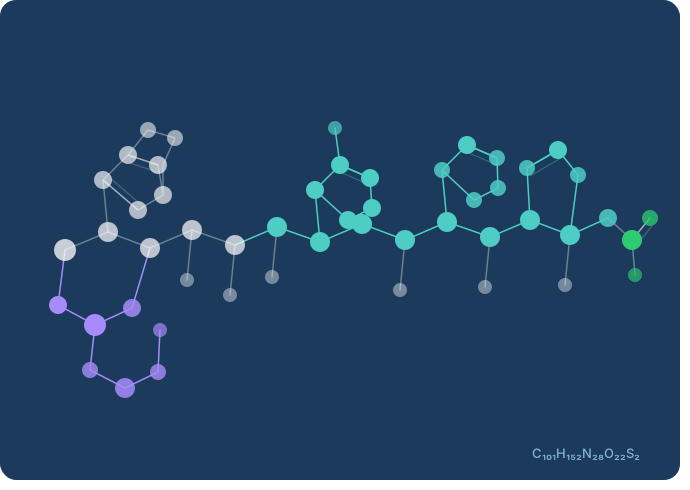
A 16 amino acid peptide encoded by mitochondrial DNA — one of only two mitochondrial-derived peptides in this catalog. Discovered in 2015 at USC. Levels decline with age and increase with exercise. Studied for metabolic regulation, insulin sensitivity, longevity, and cardiovascular protection. Considered an exercise mimetic. No human clinical trials completed.
StatusResearch Compound
FormsInjectable
View Full Intel →
Longevity & Cellular AgingObservational
Epitalon
Epithalon · AEDG
39
Epitalon
Epithalon · AEDG
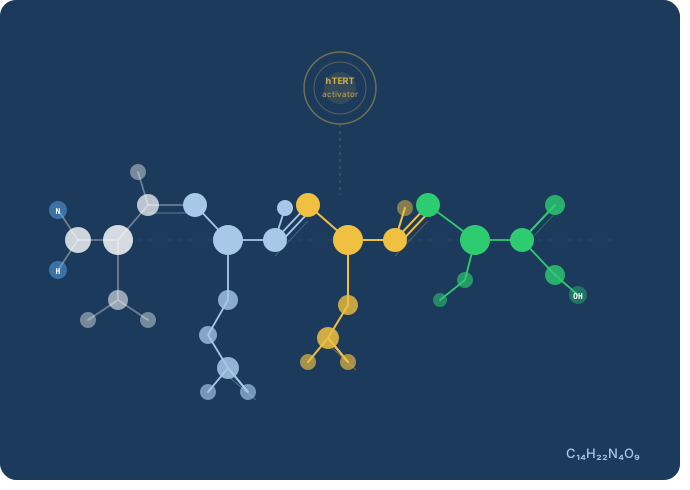
A synthetic tetrapeptide (Ala-Glu-Asp-Gly) developed by Russian gerontologist Vladimir Khavinson as a synthetic analog of a bovine pineal gland extract. The most ambitious claim in the catalog — that four amino acids can activate telomerase, elongate telomeres, and restore pineal melatonin production. Three decades of primarily Russian research support a genuine mechanistic case. Western independent replication remains limited.
StatusResearch Compound
FormsInjectable · Nasal
View Full Intel →
Longevity & Cellular AgingHuman RCT
Carnosine
Car
73
Carnosine
Car
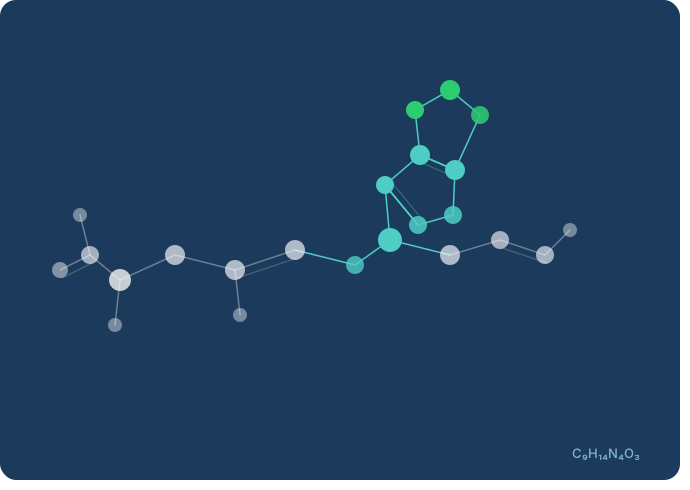
A naturally occurring dipeptide found in high concentrations in muscle and brain tissue, first discovered in 1900. Works through four distinct mechanisms — pH buffering, antioxidant activity, anti-glycation, and heavy metal chelation. Strong human RCT evidence for athletic endurance, skin anti-aging, cognitive protection, and blood sugar regulation. OTC with over 120 years of research history.
StatusOTC Supplement
FormsOral · Capsule
View Full Intel →
Longevity & Cellular AgingAnimal / In Vitro
Pinealon
EDR / Glu-Asp-Arg
10
Pinealon
EDR / Glu-Asp-Arg
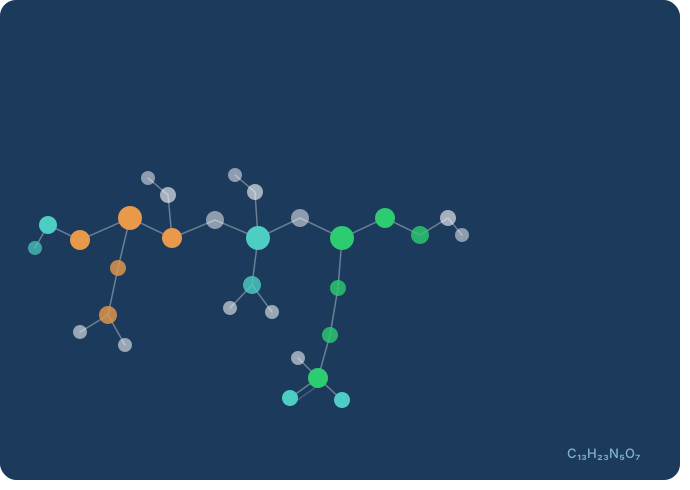
A synthetic tripeptide (Glu-Asp-Arg) developed by Vladimir Khavinson's group at the St. Petersburg Institute of Bioregulation. Research focuses on neuroprotection, antioxidant activity, and cognitive preservation in aging models. Evidence is preclinical and originates almost entirely from one research institution. No independent human trials. Shares the same Russian literature caveats as Epitalon and Semax.
StatusResearch Compound
FormsInjectable · Nasal
View Full Intel →
Longevity & Cellular AgingHuman RCT
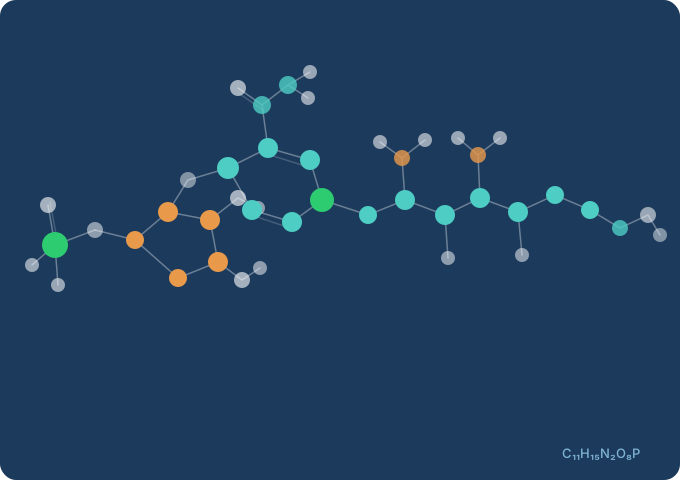
NMN
Nicotinamide Mononucleotide / b-NMN
74
NMN
Nicotinamide Mononucleotide / b-NMN
A direct precursor to NAD+, the coenzyme central to cellular energy production, DNA repair, and aging biology. NAD+ declines with age across tissues. Multiple human RCTs confirm oral NMN reliably raises blood NAD+ levels. Whether elevated NAD+ translates to meaningful anti-aging outcomes remains an open question — the mechanism is solid, the clinical evidence is early. OTC supplement, widely available.
StatusOTC Supplement (regulatory status evolving)
FormsOral · Capsule · Powder
View Full Intel →
Longevity & Cellular AgingHuman RCT
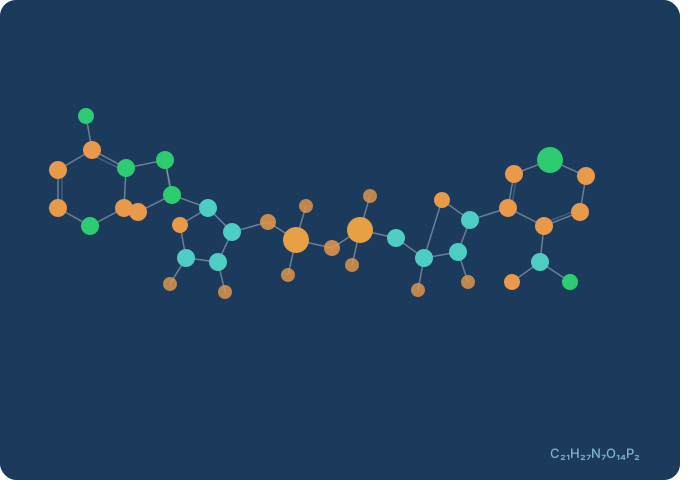
NAD+
Nicotinamide Adenine Dinucleotide / NAD
69
NAD+
Nicotinamide Adenine Dinucleotide / NAD
The coenzyme at the center of cellular energy metabolism, DNA repair, and sirtuin signaling — and one of the most actively studied targets in longevity science. Levels decline with age, driving interest in precursor supplementation (NMN, NR) that reliably raises circulating NAD+ in human trials. Whether that translates to meaningful anti-aging outcomes remains the open question. Direct oral NAD+ is poorly absorbed, so the human evidence base rests on its precursors.
StatusOTC Supplement
FormsOral · IV
View Full Intel →
Longevity & Cellular AgingObservational
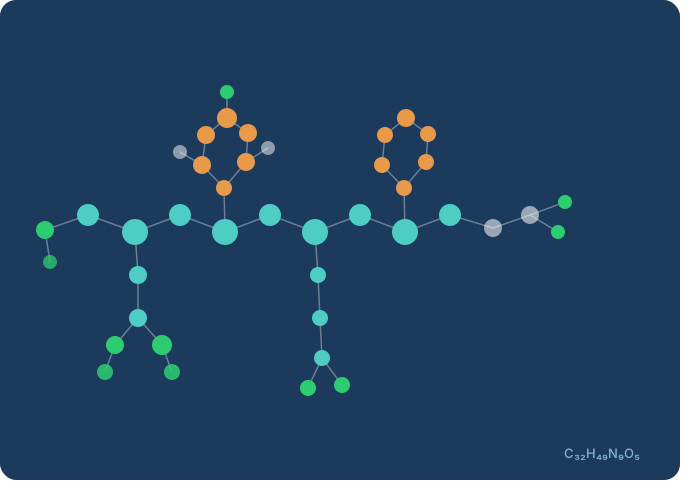
SS-31
Elamipretide · Bendavia · MTP-131
50
SS-31
Elamipretide · Bendavia · MTP-131
A mitochondria-targeting tetrapeptide that selectively concentrates in the inner mitochondrial membrane and stabilizes cardiolipin — a phospholipid essential for electron transport chain function. One of the few compounds in the Longevity category to reach Phase III clinical trials. The pivotal MMPOWER-3 trial failed its primary endpoints in primary mitochondrial myopathy; Barth syndrome data (TAZPOWER) showed meaningful 48-week benefit. Strong foundational science, mixed human translation.
StatusResearch Compound
FormsInjectable
View Full Intel →
Longevity & Cellular AgingHuman RCT

Glutathione
GSH
60
Glutathione
GSH
The body's master antioxidant, a tripeptide found in nearly every cell. Strong biology, genuine human trials, but a long-running debate over whether supplemental glutathione is actually absorbed and raises tissue stores.
StatusOTC Supplement
FormsOral · Nasal · Topical · IV
View Full Intel →
Immune & AntiviralHuman RCT
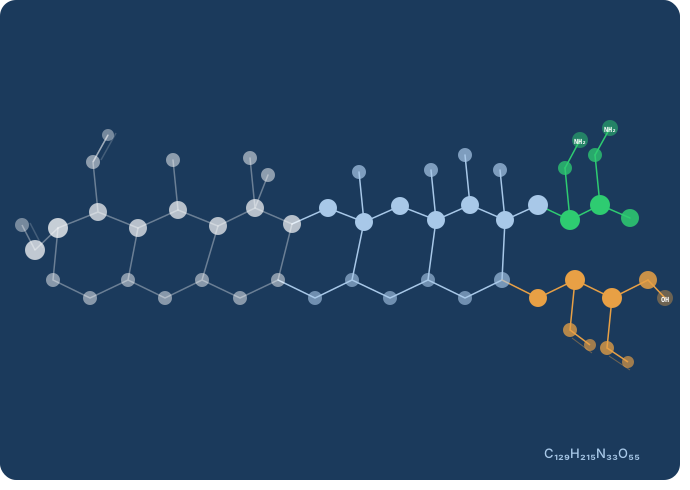
Thymosin Alpha-1
Ta1 · Thymalfasin · Zadaxin
94
Thymosin Alpha-1
Ta1 · Thymalfasin · Zadaxin
A naturally occurring thymic peptide first isolated in 1977. The synthetic form — thymalfasin — is approved in over 35 countries for chronic hepatitis B, hepatitis C, and as an immune adjuvant. Over 30 published RCTs and 11,000+ trial subjects make it one of the most clinically validated immunomodulatory peptides in existence. Activates TLR2 and TLR9 to drive T-cell maturation and NK cell activation.
StatusPrescription — Approved 35+ countries
FormsInjectable
View Full Intel →
Immune & AntiviralAnimal / In Vitro
LL-37
CAP-18 · Human Cathelicidin
41
LL-37
CAP-18 · Human Cathelicidin
The only known member of the cathelicidin family of antimicrobial peptides expressed in humans. Naturally produced by neutrophils and epithelial cells as frontline defense against infection. Effectively combats over 38 bacteria, 16 fungi, and 16 viruses through direct membrane disruption — a mechanism that is extraordinarily difficult for pathogens to develop resistance to. No FDA approval. Active clinical trials for wound healing.
StatusResearch Compound
FormsInjectable · Topical
View Full Intel →
Sexual HealthHuman RCT
PT-141
Bremelanotide · Vyleesi
69
PT-141
Bremelanotide · Vyleesi
A synthetic cyclic heptapeptide and melanocortin receptor agonist. FDA approved in June 2019 as Vyleesi for hypoactive sexual desire disorder in premenopausal women — the only peptide in this catalog targeting sexual health. Unlike PDE5 inhibitors which work on blood vessels, PT-141 works centrally through the nervous system via MC4R activation to increase sexual desire. Prescription only.
StatusPrescription — FDA Approved
FormsInjectable
View Full Intel →
Sexual HealthObservational
Melanotan II
MT-II / Melanotan 2
38
Melanotan II
MT-II / Melanotan 2
A synthetic analog of alpha-MSH that activates melanocortin receptors for both skin tanning (MC1R) and sexual arousal (MC4R). The direct precursor to FDA-approved PT-141 — development was abandoned before Phase III. No regulatory approval anywhere. Sold as a grey-market research chemical with documented safety concerns including mole darkening and cardiovascular effects.
StatusUnapproved Research Chemical
FormsInjectable · Nasal (grey market)
View Full Intel →
Hormones & NeuromodulatorsHuman RCT
Oxytocin
Love Hormone · Bonding Peptide
64
Oxytocin
Love Hormone · Bonding Peptide
A hypothalamic neuropeptide hormone with one of the longest clinical histories of any compound in the catalog — FDA-approved for decades for labor induction and postpartum hemorrhage. Community interest centers on intranasal oxytocin for social cognition, bonding, and anxiety reduction. Dozens of RCTs exist; results are mixed. Funding independence is a genuine strength — this literature is almost entirely academic. A compound where the mechanism is unimpeachable and human outcome data hasn't fully kept pace.
StatusPrescription
FormsNasal · Injectable
View Full Intel →
Hormones & NeuromodulatorsHuman RCT

Kisspeptin-10
KP-10
47
Kisspeptin-10
KP-10
A decapeptide that acts one step upstream of GnRH, stimulating the pituitary to release LH and FSH. Studied primarily at academic reproductive-endocrinology centers, with its strongest evidence in IVF oocyte-maturation triggering as a lower-risk alternative to hCG. The community-discussed TRT and post-cycle uses rest on thinner direct evidence — a single dose produces only a transient LH pulse. Research compound in Western markets.
StatusResearch Compound
FormsInjectable
View Full Intel →
Hormones & NeuromodulatorsHuman RCT

Gonadorelin
GnRH
77
Gonadorelin
GnRH
A synthetic decapeptide identical to the body's own GnRH, with decades of FDA-approved clinical use for pituitary-function testing and ovulation induction. Its defining property: delivered in pulses it stimulates the reproductive axis, but continuous exposure suppresses it. Widely used off-label as an HCG alternative to preserve testicular function during TRT — though that use relies on a very different dosing pattern than the pulsatile-pump evidence base. Score reflects the approved indications.
StatusPrescription — FDA Approved
FormsInjectable
View Full Intel →
Peptide-AdjacentAnimal / In Vitro
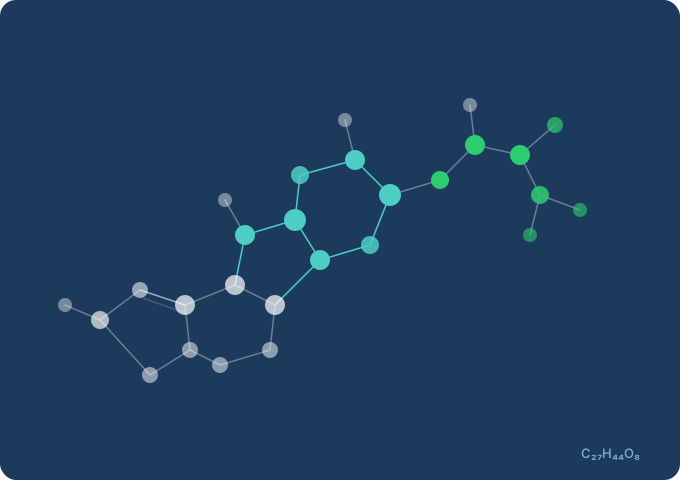
Turkesterone
Turk
37
Turkesterone
Turk
A naturally occurring plant-derived ecdysteroid extracted from Ajuga turkestanica, popularized as a natural alternative to anabolic steroids. Does not appear to bind androgen receptors and is not expected to cause hormonal suppression. Human evidence base is currently very limited and does not match the boldness of mainstream fitness claims.
StatusOTC Supplement
FormsOral · Capsule
View Full Intel →
Peptide-AdjacentAnimal / In Vitro
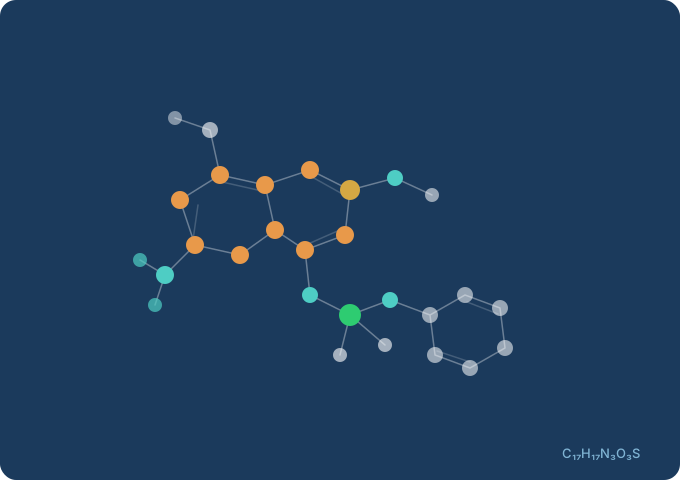
SLU-PP-332
ERRa Agonist / Exercise Mimetic
36
SLU-PP-332
ERRa Agonist / Exercise Mimetic
A synthetic small-molecule pan-agonist of estrogen-related receptors (ERRa, b, g) developed at Saint Louis University. Activates the same mitochondrial and metabolic gene programs triggered by aerobic exercise — in preclinical models only. No human trials completed. Among the most discussed exercise mimetics in current research. NIH-funded independent research.
StatusResearch Compound
FormsOral (research)
View Full Intel →
Peptide-AdjacentAnimal / In Vitro
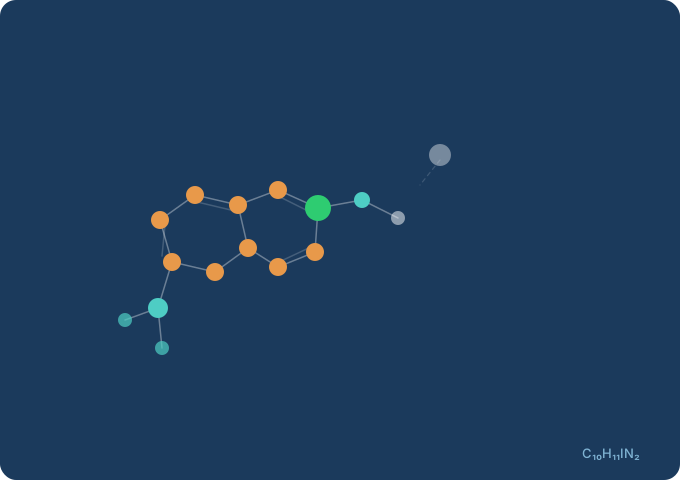
5-Amino-1MQ
5-Amino-1-Methylquinolinium
28
5-Amino-1MQ
5-Amino-1-Methylquinolinium
A small-molecule inhibitor of NNMT (nicotinamide N-methyltransferase) being researched for fat loss and metabolic optimization. Preclinical data shows fat cell shrinkage and reduced adiposity without changes in food intake. No completed human trials. Emerging human clinical trial activity as of 2026. Research compound only.
StatusResearch Compound
FormsOral (research)
View Full Intel →
The Full Catalog
55 compounds. Evidence graded, mechanism explained, risks disclosed. No sponsorships. No agenda.
Category
Evidence Grade
Showing all 55 compounds
Foundational SupplementsHuman RCT
Creatine
Creatine Monohydrate
93
Creatine
Creatine Monohydrate
The most extensively researched performance supplement in existence with over 500 peer-reviewed studies. Increases muscle phosphocreatine stores to extend high intensity exercise capacity, accelerate strength gains, and support lean muscle development. Emerging evidence supports cognitive and neuroprotective benefits. Exceptionally safe profile validated across decades of research.
StatusOTC Supplement
FormsOral · Powder
View Full Intel →
Foundational SupplementsHuman RCT
L-Carnitine
Levocarnitine · Carnitine
93
L-Carnitine
Levocarnitine · Carnitine
A naturally occurring amino acid derivative first discovered in 1905, found in highest concentrations in red meat and synthesized endogenously from lysine and methionine. Plays a central role in transporting long-chain fatty acids into mitochondria for energy production. One of the most extensively studied supplements in existence, with dozens of meta-analyses aggregating hundreds of RCTs. OTC with an established safety record. Weight-loss and exercise effects are real but modest in healthy adults.
StatusOTC Supplement
FormsOral · Capsule · Powder · IV
View Full Intel →
MetabolicHuman RCT
GLP-1
GLP
94
GLP-1
GLP
A naturally occurring hormone whose synthetic analogs — including semaglutide (Ozempic, Wegovy) and liraglutide — have become among the most prescribed medications in the world. FDA approved with an extensive clinical evidence base. Works by stimulating insulin release, suppressing appetite, and slowing gastric emptying. Requires a prescription through a licensed provider.
StatusPrescription
FormsInjectable · Oral
View Full Intel →
MetabolicHuman RCT
Tirzepatide
Mounjaro · Zepbound
91
Tirzepatide
Mounjaro · Zepbound
A once-weekly injectable dual hormone receptor agonist targeting both GIP and GLP-1 receptors simultaneously. FDA approved for type 2 diabetes (Mounjaro) and chronic weight management (Zepbound). The SURMOUNT trial program demonstrated up to 20.9% body weight loss — outcomes previously associated only with bariatric surgery. Prescription only.
StatusPrescription
FormsInjectable
View Full Intel →
MetabolicHuman RCT
Retatrutide
Reta or Triple G
77
Retatrutide
Reta or Triple G
The most advanced peptide in active clinical development on PeptideClear. A triple hormone receptor agonist targeting GLP-1, GIP, and glucagon receptors simultaneously — producing weight loss results in Phase II trials (~24% body weight) that exceed both semaglutide and tirzepatide. Currently in Phase III trials with Eli Lilly. PeptideClear is actively tracking its path to approval.
StatusEmerging / Clinical Trial
FormsInjectable
View Full Intel →
MetabolicHuman RCT
Tesamorelin
Egrifta
88
Tesamorelin
Egrifta
A synthetic analog of Growth Hormone Releasing Hormone and the only GHRH analog with an FDA-approved indication. Approved under the brand name Egrifta for visceral fat reduction in HIV patients with lipodystrophy. Widely used off-label in longevity and metabolic health contexts for targeted visceral fat reduction and emerging cognitive benefits. Prescription only.
StatusPrescription — FDA Approved
FormsInjectable
View Full Intel →
MetabolicHuman RCT
Cagrilintide
Cagri
68
Cagrilintide
Cagri
A long-acting amylin analog developed by Novo Nordisk for once-weekly injection. Mimics amylin, a pancreatic hormone that regulates appetite and slows gastric emptying. Being developed primarily in combination with semaglutide (CagriSema) for obesity and type 2 diabetes. Phase II data is robust — the CagriSema combination showed 15-22% weight loss over 32 weeks. Phase III underway. Not yet approved.
StatusEmerging / Clinical Trial
FormsInjectable
View Full Intel →
MetabolicHuman RCT
Survodutide
BI 456906
67
Survodutide
BI 456906
Survodutide is a dual glucagon/GLP-1 receptor agonist developed by Boehringer Ingelheim. It is currently in Phase II/III clinical trials for obesity and non-alcoholic steatohepatitis (NASH/MASH). Unlike tirzepatide (GIP/GLP-1) and retatrutide (GIP/GLP-1/glucagon), survodutide combines GLP-1 and glucagon receptor activation, a mechanism that targets both appetite and hepatic fat metabolism. Phase II results showed meaningful weight loss; Phase III is ongoing. Not yet approved.
StatusEmerging / Clinical Trial
FormsInjectable
View Full Intel →
MetabolicObservational
AOD-9604
hGH Fragment 176-191
33
AOD-9604
hGH Fragment 176-191
A synthetic 16 amino acid peptide fragment derived from the C-terminal domain of human growth hormone. Originally developed as an anti-obesity drug. Despite completing six human clinical trials involving over 900 participants, AOD-9604 failed to achieve statistical significance in its largest Phase IIb trial. Increasingly studied for cartilage repair. No regulatory approval.
StatusResearch Compound
FormsInjectable
View Full Intel →
Growth HormoneHuman RCT
Sermorelin
Serm
64
Sermorelin
Serm
A synthetic analog of the body's natural Growth Hormone Releasing Hormone (GHRH), comprising its first 29 amino acids. The only peptide in this catalog with prior FDA approval history, previously prescribed for pediatric growth hormone deficiency. Available through licensed compounding pharmacies by prescription. Stimulates the pituitary to produce growth hormone naturally.
StatusPrescription
FormsInjectable
View Full Intel →
Growth HormoneAnimal Only
Ipamorelin
IPA
35
Ipamorelin
IPA
A selective synthetic peptide that stimulates growth hormone release from the pituitary gland without significantly affecting cortisol or prolactin. One of the most popular peptides in longevity and performance protocols due to its clean hormonal profile. Has reached human clinical trials. Often combined with CJC-1295 for amplified effect.
StatusResearch Compound
FormsInjectable
View Full Intel →
Growth HormoneObservational
CJC-1295
Modified GRF (1-29) / DAC
44
CJC-1295
Modified GRF (1-29) / DAC
A synthetic analog of Growth Hormone Releasing Hormone and one of the most widely used peptides in the longevity and performance communities. Exists in two distinct forms frequently confused — with DAC (multi-day half-life via albumin binding) and without DAC (similar to Sermorelin). Most commonly combined with Ipamorelin for synergistic GH release. Research compound only.
StatusResearch Compound
FormsInjectable
View Full Intel →
Growth HormoneObservational
Ibutamoren
MK-677
63
Ibutamoren
MK-677
An orally active non-peptide compound that mimics ghrelin to stimulate sustained growth hormone and IGF-1 release. The only compound in this catalog that achieves growth hormone secretagogue effects without injection. Has reached Phase II human clinical trials for muscle wasting and hip fracture recovery. Sold as a research compound, not FDA approved.
StatusResearch Compound
FormsOral
View Full Intel →
Growth HormoneObservational
Hexarelin
Examorelin · GHRP-6 Analog
43
Hexarelin
Examorelin · GHRP-6 Analog
A synthetic hexapeptide and modified derivative of GHRP-6 in which tryptophan was substituted with the more stable 2-methyl-tryptophan. Among the most potent GH secretagogues studied. Distinct from other GH compounds for its cardioprotective mechanism via CD36 receptor activation — independent of GH release entirely. Desensitization with chronic use requires cycling. Research compound only.
StatusResearch Compound
FormsInjectable
View Full Intel →
Growth HormoneAnimal / In Vitro
Follistatin-344
FST-344 / Follistatin
33
Follistatin-344
FST-344 / Follistatin
A 344-amino acid glycoprotein that acts as a natural antagonist of myostatin — the body's primary brake on muscle growth. By binding and neutralizing myostatin and activin, Follistatin-344 removes the inhibitory signal on muscle fiber development. Compelling animal data. Early human gene therapy trials for muscular dystrophy only. Not approved for general use.
StatusResearch Compound
FormsInjectable (research)
View Full Intel →
Growth HormoneHuman RCT
HGH
Growth Hormone / Somatropin
90
HGH
Growth Hormone / Somatropin
The body's own growth hormone, produced as a recombinant 191-amino-acid protein. FDA approved for specific deficiency and growth disorders, where the evidence is strong. Widely used off-label for anti-aging, fat loss, and performance, where the evidence is far weaker and the legal status is restrictive.
StatusPrescription
FormsInjectable
View Full Intel →
Growth HormoneAnimal / In Vitro
IGF-1 LR3
34
IGF-1 LR3
A lab-engineered, long-acting version of IGF-1, the growth factor HGH works through. Native IGF-1 is a well-studied approved drug; this specific analog is a research reagent with essentially no human trials of its own.
StatusResearch Compound
FormsInjectable
View Full Intel →
Growth HormoneObservational
GHRP-6
Growth Hormone Releasing Peptide-6
47
GHRP-6
Growth Hormone Releasing Peptide-6
The original growth-hormone-releasing peptide and the template for the entire GHRP family. Well-characterized pharmacology in humans, no therapeutic outcome trials, and the strongest appetite stimulation of any peptide in its class.
StatusResearch Compound
FormsInjectable
View Full Intel →
Growth HormoneObservational
GHRP-2
Growth Hormone Releasing Peptide-2
61
GHRP-2
Growth Hormone Releasing Peptide-2
A synthetic hexapeptide ghrelin mimetic that stimulates pituitary growth hormone release. Among the most studied GHRPs with a meaningful human pharmacokinetic evidence base spanning the 1990s-2010s, including replication across multiple independent research groups. Scores higher than its GHRP siblings due to stronger independent replication and funding independence. Approved in Japan as pralmorelin for GH deficiency testing. Stimulates cortisol and prolactin alongside GH — a less selective profile than Ipamorelin.
StatusResearch Compound
FormsInjectable
View Full Intel →
Recovery & PerformanceAnimal Only
BPC-157
Wolverine
20
BPC-157
Wolverine
A synthetic peptide studied in animal models for tendon repair, gut healing, and anti-inflammatory effects. Derived from a protein found in gastric juice. Shows remarkable healing properties across tendons, gut lining, and nervous system in animal studies. No human RCT data currently available. Widely used in the research community. Sold as a research compound only.
StatusResearch Compound
FormsInjectable · Oral
View Full Intel →
Recovery & PerformanceAnimal / In Vitro
Pentadeca Arginate
PDA
19
Pentadeca Arginate
PDA
A synthetic 15-amino acid peptide marketed as an upgraded alternative to BPC-157, differing at its C-terminus with an arginine substitution. Entered the market primarily as a regulatory workaround following FDA action against BPC-157 compounding. No published human trials exist. Claims of superiority over BPC-157 are not supported by peer-reviewed evidence. The research base is in its earliest stages.
StatusResearch Compound
FormsInjectable · Oral
View Full Intel →
Recovery & PerformanceAnimal Only
TB-500
TB or Wolverine
41
TB-500
TB or Wolverine
A synthetic peptide derived from Thymosin Beta-4, a protein naturally present in human cells. Studied in animal models for muscle and tendon repair, wound healing, and cardiac tissue recovery. Widely used alongside BPC-157 as a recovery stack in the biohacking community. No human clinical trials completed to date.
StatusResearch Compound
FormsInjectable
View Full Intel →
Recovery & PerformanceAnimal / In Vitro
KPV
Lys-Pro-Val
42
KPV
Lys-Pro-Val
A synthetic tripeptide derived from the C-terminal fragment of alpha-melanocyte stimulating hormone (a-MSH). Unlike most peptides in this catalog which stimulate or build, KPV is primarily a regulator — it quiets overactive inflammatory responses without broadly suppressing immune function. Most studied for gut inflammation, wound healing, and antimicrobial activity. One of the four components of the KLOW recovery stack.
StatusResearch Compound
FormsInjectable · Oral
View Full Intel →
Skin & HairHuman RCT
Palmitoyl Tripeptide-1
Matrixyl
51
Palmitoyl Tripeptide-1
Matrixyl
A synthetic peptide commercially known as Matrixyl, purpose-built for skincare. Works as a matrikine, mimicking a collagen breakdown signal that triggers fibroblasts to produce new collagen, elastin, and hyaluronic acid. One of the most widely used and well-studied peptides in the global skincare industry with strong human evidence for wrinkle reduction and skin firmness. Safe for use during pregnancy.
StatusOTC Supplement
FormsTopical · Serum
View Full Intel →
Skin & HairHuman RCT
GHK-Cu
Copper
55
GHK-Cu
Copper
A naturally occurring copper-bound tripeptide first isolated from human plasma in 1973, with levels declining significantly with age. Stimulates collagen and elastin synthesis, promotes wound healing, and demonstrates gene expression resetting properties in aging cells. The only peptide in this catalog that spans both mainstream OTC skincare and the gray zone research community.
StatusOTC Supplement
FormsTopical · Serum
View Full Intel →
Skin & HairHuman RCT
Collagen Type I
Col-I
82
Collagen Type I
Col-I
The most abundant protein in the human body and the best-studied peptide supplement in this catalog. Derived from bovine or marine sources and hydrolyzed for absorption. Strong human RCT evidence for skin elasticity, joint comfort, nail strength, and bone density support. Widely available OTC as a powder, capsule, or liquid with an excellent safety profile.
StatusOTC Supplement
FormsOral · Powder
View Full Intel →
Skin & HairHuman RCT
Collagen Type III
Col-III
68
Collagen Type III
Col-III
The second most abundant collagen in the body, found alongside Type I in skin, blood vessels, and internal organs. Almost always consumed as part of a Type I and III bovine collagen blend. Supports skin firmness, vascular integrity, and gut lining health. Less independently studied than Type I but shares a robust combined evidence base.
StatusOTC Supplement
FormsOral · Powder
View Full Intel →
Skin & HairHuman RCT
Argireline
Acetyl Hexapeptide-3 / Leuphasyl
48
Argireline
Acetyl Hexapeptide-3 / Leuphasyl
A synthetic hexapeptide that partially inhibits the SNARE complex to reduce facial muscle contractions — marketed as a topical alternative to botulinum toxin. Among the most commercially prevalent cosmeceutical peptides globally. Human RCT evidence exists but is limited in sample size and largely developer-funded. Effect magnitude is significantly weaker than injectable botulinum toxin.
StatusOTC Cosmeceutical
FormsTopical · Serum
View Full Intel →
Skin & HairHuman RCT
Leuphasyl
Pentapeptide-18 · Argirelox
38
Leuphasyl
Pentapeptide-18 · Argirelox
A Lipotec-developed cosmeceutical pentapeptide that mimics enkephalin activity to dampen nerve signaling at the neuromuscular junction, reducing expression-driven wrinkle depth. Best-evidenced in combination with Argireline (marketed as Argirelox), where the two compounds target the same acetylcholine pathway at distinct binding sites for a synergistic effect. Human evidence exists but is thin and developer-dependent.
StatusOTC Cosmeceutical
FormsTopical · Serum
View Full Intel →
Nootropics & NeuroprotectionObservational
Semax
ACTH 4-7 PGP
42
Semax
ACTH 4-7 PGP
A synthetic heptapeptide derived from the 4-7 fragment of adrenocorticotropic hormone, with a stabilizing Pro-Gly-Pro tail. Developed in Russia in the 1980s. Registered as a prescription medicine in Russia for ischemic stroke and optic nerve disorders. Widely used in the nootropic community for cognitive enhancement, neuroprotection, and focus. Research compound in all Western markets.
StatusResearch Compound
FormsNasal · Injectable
View Full Intel →
Nootropics & NeuroprotectionObservational
Selank
Tuftsin Analog · TKPRPGP
36
Selank
Tuftsin Analog · TKPRPGP
A synthetic heptapeptide derived from Tuftsin, a naturally occurring tetrapeptide fragment of immunoglobulin G, extended with a Pro-Gly-Pro stabilizing tail. Developed by the same Russian team as Semax. Registered in Russia for anxiety disorders. Demonstrates anxiolytic effects comparable to benzodiazepines without sedation or dependence risk. The calming counterpart to Semax's stimulating nootropic profile.
StatusResearch Compound
FormsNasal · Injectable
View Full Intel →
Nootropics & NeuroprotectionHuman RCT
Cerebrolysin
FPE 1070
62
Cerebrolysin
FPE 1070
A porcine brain-derived peptide mixture approved in 30+ countries for stroke rehabilitation, traumatic brain injury, and Alzheimer's disease. Contains low-molecular-weight peptide fractions that cross the blood-brain barrier and mimic neurotrophic factors. Multiple RCTs exist, strongest in stroke recovery. Evidence is geographically concentrated in Eastern Europe and China — real but with limited Western independent replication. Not FDA approved.
StatusPrescription — Approved 30+ countries
FormsInjectable
View Full Intel →
Nootropics & NeuroprotectionAnimal / In Vitro
Humanin
HN · HNG
37
Humanin
HN · HNG
A naturally occurring 24 amino acid peptide encoded by mitochondrial DNA, discovered in 2001 from an Alzheimer's patient's brain. A potent suppressor of neuronal death induced by multiple familial Alzheimer's disease genes. Circulating levels decline with age. Studied for neuroprotection, Alzheimer's disease, cardiovascular protection, and longevity. No human clinical trials completed.
StatusResearch Compound
FormsInjectable
View Full Intel →
Nootropics & NeuroprotectionObservational
DSIP
Delta Sleep-Inducing Peptide
37
DSIP
Delta Sleep-Inducing Peptide
A naturally occurring nonapeptide first isolated from rabbit brain in 1977. Produced in the hypothalamus with marked diurnal variation. A small human study showed intravenous DSIP increased total sleep time by 59% without classical sedation. Studied for slow-wave sleep promotion, GH stimulation, and stroke recovery. The mechanism remains incompletely characterized after nearly 50 years of research.
StatusResearch Compound
FormsInjectable · Nasal
View Full Intel →
Nootropics & NeuroprotectionAnimal / In Vitro
Dihexa
PNB-0408 · N-hexanoic-Tyr-Ile
30
Dihexa
PNB-0408 · N-hexanoic-Tyr-Ile
A synthetic analog of angiotensin IV developed at Washington State University. Orally bioavailable and blood-brain barrier permeable — rare properties for a peptide. Seven orders of magnitude more potent than BDNF in synaptogenesis assays. Activates the HGF/c-Met pathway to drive formation of new synaptic connections. No human clinical trials completed. The most potent and least safety-characterized nootropic compound in this catalog.
StatusResearch Compound
FormsOral · Injectable
View Full Intel →
Nootropics & NeuroprotectionAnimal / In Vitro
PE-22-28
Mini-Spadin
27
PE-22-28
Mini-Spadin
An early-stage, lab-only peptide that blocks the TREK-1 potassium channel and produces fast antidepressant-like effects in mice. Interesting bench science, no human testing, and almost all of it from a single research group.
StatusResearch Compound
FormsInjectable
View Full Intel →
Nootropics & NeuroprotectionAnimal / In Vitro
Adamax
N-Acetyl Semax Adamantane
11
Adamax
N-Acetyl Semax Adamantane
A synthetic nootropic peptide built on the Semax backbone with two pharmacokinetic modifications: N-terminal acetylation to slow enzymatic degradation, and a C-terminal adamantane group to improve blood-brain barrier penetration and extend half-life. No published study of Adamax exists in any species. All proposed mechanisms are structural inferences from parent compounds Semax and P21. Among the least-evidenced compounds in the catalog — not because the rationale is implausible, but because it simply has not been studied.
StatusResearch Compound
FormsInjectable · Nasal
View Full Intel →
Longevity & Cellular AgingAnimal / In Vitro
MOTS-c
Mitochondrial Open Reading Frame
41
MOTS-c
Mitochondrial Open Reading Frame
A 16 amino acid peptide encoded by mitochondrial DNA — one of only two mitochondrial-derived peptides in this catalog. Discovered in 2015 at USC. Levels decline with age and increase with exercise. Studied for metabolic regulation, insulin sensitivity, longevity, and cardiovascular protection. Considered an exercise mimetic. No human clinical trials completed.
StatusResearch Compound
FormsInjectable
View Full Intel →
Longevity & Cellular AgingObservational
Epitalon
Epithalon · AEDG
39
Epitalon
Epithalon · AEDG
A synthetic tetrapeptide (Ala-Glu-Asp-Gly) developed by Russian gerontologist Vladimir Khavinson as a synthetic analog of a bovine pineal gland extract. The most ambitious claim in the catalog — that four amino acids can activate telomerase, elongate telomeres, and restore pineal melatonin production. Three decades of primarily Russian research support a genuine mechanistic case. Western independent replication remains limited.
StatusResearch Compound
FormsInjectable · Nasal
View Full Intel →
Longevity & Cellular AgingHuman RCT
Carnosine
Car
73
Carnosine
Car
A naturally occurring dipeptide found in high concentrations in muscle and brain tissue, first discovered in 1900. Works through four distinct mechanisms — pH buffering, antioxidant activity, anti-glycation, and heavy metal chelation. Strong human RCT evidence for athletic endurance, skin anti-aging, cognitive protection, and blood sugar regulation. OTC with over 120 years of research history.
StatusOTC Supplement
FormsOral · Capsule
View Full Intel →
Longevity & Cellular AgingAnimal / In Vitro
Pinealon
EDR / Glu-Asp-Arg
10
Pinealon
EDR / Glu-Asp-Arg
A synthetic tripeptide (Glu-Asp-Arg) developed by Vladimir Khavinson's group at the St. Petersburg Institute of Bioregulation. Research focuses on neuroprotection, antioxidant activity, and cognitive preservation in aging models. Evidence is preclinical and originates almost entirely from one research institution. No independent human trials. Shares the same Russian literature caveats as Epitalon and Semax.
StatusResearch Compound
FormsInjectable · Nasal
View Full Intel →
Longevity & Cellular AgingHuman RCT
NMN
Nicotinamide Mononucleotide / b-NMN
74
NMN
Nicotinamide Mononucleotide / b-NMN
A direct precursor to NAD+, the coenzyme central to cellular energy production, DNA repair, and aging biology. NAD+ declines with age across tissues. Multiple human RCTs confirm oral NMN reliably raises blood NAD+ levels. Whether elevated NAD+ translates to meaningful anti-aging outcomes remains an open question — the mechanism is solid, the clinical evidence is early. OTC supplement, widely available.
StatusOTC Supplement (regulatory status evolving)
FormsOral · Capsule · Powder
View Full Intel →
Longevity & Cellular AgingHuman RCT
NAD+
Nicotinamide Adenine Dinucleotide / NAD
69
NAD+
Nicotinamide Adenine Dinucleotide / NAD
The coenzyme at the center of cellular energy metabolism, DNA repair, and sirtuin signaling — and one of the most actively studied targets in longevity science. Levels decline with age, driving interest in precursor supplementation (NMN, NR) that reliably raises circulating NAD+ in human trials. Whether that translates to meaningful anti-aging outcomes remains the open question. Direct oral NAD+ is poorly absorbed, so the human evidence base rests on its precursors.
StatusOTC Supplement
FormsOral · IV
View Full Intel →
Longevity & Cellular AgingObservational
SS-31
Elamipretide · Bendavia · MTP-131
50
SS-31
Elamipretide · Bendavia · MTP-131
A mitochondria-targeting tetrapeptide that selectively concentrates in the inner mitochondrial membrane and stabilizes cardiolipin — a phospholipid essential for electron transport chain function. One of the few compounds in the Longevity category to reach Phase III clinical trials. The pivotal MMPOWER-3 trial failed its primary endpoints in primary mitochondrial myopathy; Barth syndrome data (TAZPOWER) showed meaningful 48-week benefit. Strong foundational science, mixed human translation.
StatusResearch Compound
FormsInjectable
View Full Intel →
Longevity & Cellular AgingHuman RCT
Glutathione
GSH
60
Glutathione
GSH
The body's master antioxidant, a tripeptide found in nearly every cell. Strong biology, genuine human trials, but a long-running debate over whether supplemental glutathione is actually absorbed and raises tissue stores.
StatusOTC Supplement
FormsOral · Nasal · Topical · IV
View Full Intel →
Immune & AntiviralHuman RCT
Thymosin Alpha-1
Ta1 · Thymalfasin · Zadaxin
94
Thymosin Alpha-1
Ta1 · Thymalfasin · Zadaxin
A naturally occurring thymic peptide first isolated in 1977. The synthetic form — thymalfasin — is approved in over 35 countries for chronic hepatitis B, hepatitis C, and as an immune adjuvant. Over 30 published RCTs and 11,000+ trial subjects make it one of the most clinically validated immunomodulatory peptides in existence. Activates TLR2 and TLR9 to drive T-cell maturation and NK cell activation.
StatusPrescription — Approved 35+ countries
FormsInjectable
View Full Intel →
Immune & AntiviralAnimal / In Vitro
LL-37
CAP-18 · Human Cathelicidin
41
LL-37
CAP-18 · Human Cathelicidin
The only known member of the cathelicidin family of antimicrobial peptides expressed in humans. Naturally produced by neutrophils and epithelial cells as frontline defense against infection. Effectively combats over 38 bacteria, 16 fungi, and 16 viruses through direct membrane disruption — a mechanism that is extraordinarily difficult for pathogens to develop resistance to. No FDA approval. Active clinical trials for wound healing.
StatusResearch Compound
FormsInjectable · Topical
View Full Intel →
Sexual HealthHuman RCT
PT-141
Bremelanotide · Vyleesi
69
PT-141
Bremelanotide · Vyleesi
A synthetic cyclic heptapeptide and melanocortin receptor agonist. FDA approved in June 2019 as Vyleesi for hypoactive sexual desire disorder in premenopausal women — the only peptide in this catalog targeting sexual health. Unlike PDE5 inhibitors which work on blood vessels, PT-141 works centrally through the nervous system via MC4R activation to increase sexual desire. Prescription only.
StatusPrescription — FDA Approved
FormsInjectable
View Full Intel →
Sexual HealthObservational
Melanotan II
MT-II / Melanotan 2
38
Melanotan II
MT-II / Melanotan 2
A synthetic analog of alpha-MSH that activates melanocortin receptors for both skin tanning (MC1R) and sexual arousal (MC4R). The direct precursor to FDA-approved PT-141 — development was abandoned before Phase III. No regulatory approval anywhere. Sold as a grey-market research chemical with documented safety concerns including mole darkening and cardiovascular effects.
StatusUnapproved Research Chemical
FormsInjectable · Nasal (grey market)
View Full Intel →
Hormones & NeuromodulatorsHuman RCT
Oxytocin
Love Hormone · Bonding Peptide
64
Oxytocin
Love Hormone · Bonding Peptide
A hypothalamic neuropeptide hormone with one of the longest clinical histories of any compound in the catalog — FDA-approved for decades for labor induction and postpartum hemorrhage. Community interest centers on intranasal oxytocin for social cognition, bonding, and anxiety reduction. Dozens of RCTs exist; results are mixed. Funding independence is a genuine strength — this literature is almost entirely academic. A compound where the mechanism is unimpeachable and human outcome data hasn't fully kept pace.
StatusPrescription
FormsNasal · Injectable
View Full Intel →
Hormones & NeuromodulatorsHuman RCT
Kisspeptin-10
KP-10
47
Kisspeptin-10
KP-10
A decapeptide that acts one step upstream of GnRH, stimulating the pituitary to release LH and FSH. Studied primarily at academic reproductive-endocrinology centers, with its strongest evidence in IVF oocyte-maturation triggering as a lower-risk alternative to hCG. The community-discussed TRT and post-cycle uses rest on thinner direct evidence — a single dose produces only a transient LH pulse. Research compound in Western markets.
StatusResearch Compound
FormsInjectable
View Full Intel →
Hormones & NeuromodulatorsHuman RCT
Gonadorelin
GnRH
77
Gonadorelin
GnRH
A synthetic decapeptide identical to the body's own GnRH, with decades of FDA-approved clinical use for pituitary-function testing and ovulation induction. Its defining property: delivered in pulses it stimulates the reproductive axis, but continuous exposure suppresses it. Widely used off-label as an HCG alternative to preserve testicular function during TRT — though that use relies on a very different dosing pattern than the pulsatile-pump evidence base. Score reflects the approved indications.
StatusPrescription — FDA Approved
FormsInjectable
View Full Intel →
Peptide-AdjacentAnimal / In Vitro
Turkesterone
Turk
37
Turkesterone
Turk
A naturally occurring plant-derived ecdysteroid extracted from Ajuga turkestanica, popularized as a natural alternative to anabolic steroids. Does not appear to bind androgen receptors and is not expected to cause hormonal suppression. Human evidence base is currently very limited and does not match the boldness of mainstream fitness claims.
StatusOTC Supplement
FormsOral · Capsule
View Full Intel →
Peptide-AdjacentAnimal / In Vitro
SLU-PP-332
ERRa Agonist / Exercise Mimetic
36
SLU-PP-332
ERRa Agonist / Exercise Mimetic
A synthetic small-molecule pan-agonist of estrogen-related receptors (ERRa, b, g) developed at Saint Louis University. Activates the same mitochondrial and metabolic gene programs triggered by aerobic exercise — in preclinical models only. No human trials completed. Among the most discussed exercise mimetics in current research. NIH-funded independent research.
StatusResearch Compound
FormsOral (research)
View Full Intel →
Peptide-AdjacentAnimal / In Vitro
5-Amino-1MQ
5-Amino-1-Methylquinolinium
28
5-Amino-1MQ
5-Amino-1-Methylquinolinium
A small-molecule inhibitor of NNMT (nicotinamide N-methyltransferase) being researched for fat loss and metabolic optimization. Preclinical data shows fat cell shrinkage and reduced adiposity without changes in food intake. No completed human trials. Emerging human clinical trial activity as of 2026. Research compound only.
StatusResearch Compound
FormsOral (research)
View Full Intel →