Growth Hormone
CAS
863288-34-0
Molecular Weight
3368
Da
A synthetic analog of Growth Hormone Releasing Hormone (GHRH) and one of the most widely used peptides in the longevity and performance communities. Exists in two distinct forms that are frequently confused, CJC-1295 with DAC (Drug Affinity Complex) which has a multi-day half-life via albumin binding, and CJC-1295 without DAC (also called Modified GRF 1-29) which has a shorter half-life similar to Sermorelin. Most commonly used in combination with Ipamorelin for synergistic GH release. Reached Phase II clinical trials but development was discontinued. Research compound only, no regulatory approval.
Injectable
Intranasal Suitable
No
Research Compound
We break down one compound like this every week.
Subscribe free to The Honest Dose, and get the RQS Reference, every compound in the catalog scored on one page, as a welcome gift.
Community signal mirrors Ipamorelin closely because the compounds are so frequently used together. CJC-1295 with DAC (Drug Affinity Complex) vs without is a meaningful split in community discussion with DAC is preferred for less frequent dosing; without is preferred by users who want more controlled GH pulses. The CJC/Ipa stack is one of the few peptide combinations where the community has broadly converged on a preferred protocol, suggesting enough accumulated experience to produce signal. Recovery, sleep, and gradual body composition shifts over 12+ weeks are the consistent anecdotal themes. Users frequently note that expectations need to be calibrated toward subtle, gradual changes rather than dramatic acute effects.
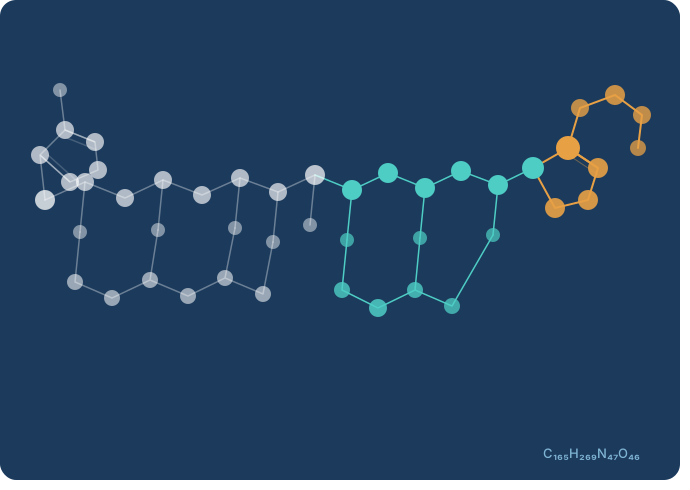
CJC-1295 is a modified version of the first 29 amino acids of GHRH with four substitutions that improve stability and receptor binding. The DAC version adds a maleimidopropionic acid group at the C-terminus that covalently binds to albumin in the bloodstream, dramatically extending its half-life from minutes to 6-8 days. This albumin binding mechanism is what makes CJC-1295 with DAC unique among GHRH analogs. The without-DAC version (Modified GRF 1-29) is structurally different and functionally closer to Sermorelin despite being marketed under the same CJC-1295 name by many vendors, a source of significant confusion in the research community. CJC-1295 is prohibited under WADA Section S2 as a GH-releasing factor.
CJC-1295 binds to GHRH receptors on somatotroph cells in the anterior pituitary gland, stimulating pulsatile growth hormone synthesis and secretion. The DAC modification allows the peptide to covalently bind free thiols on plasma proteins, primarily albumin, creating a peptide-protein conjugate that evades rapid renal clearance and protects the active sequence from enzymatic degradation. This produces sustained, physiological GH pulses over multiple days from a single injection rather than the acute spike and rapid clearance seen with unmodified GHRH analogs. Like Sermorelin and Tesamorelin, it works within the body's natural somatostatin feedback loop, preserving regulatory control over GH levels and avoiding supraphysiological GH elevation.
CJC-1295 is most studied and most commonly used for growth hormone optimization, stimulating the pituitary to produce more GH as a strategy for body composition improvement, recovery, sleep quality, and anti-aging outcomes. The combination of CJC-1295 with Ipamorelin has become one of the most popular peptide stacks in the longevity community because the two compounds work on complementary GH release pathways, CJC-1295 via GHRH receptor stimulation and Ipamorelin via ghrelin receptor stimulation, producing synergistic GH release greater than either alone.
Human evidence comes primarily from a Phase II trial published by Teichman et al. in 2006 which showed CJC-1295 increased GH levels by 200-1000% and IGF-1 levels by 55-106% in healthy adults with effects lasting up to 6 days. However development was discontinued following an unrelated adverse event in a trial subject. The evidence base beyond this single trial is limited to animal studies and community observational data. Claims about fat loss, muscle gain, and anti-aging benefits in humans are extrapolated from GH biology and community experience rather than controlled trials.
The most commonly reported side effects include water retention, joint stiffness, and injection site reactions. The DAC version's prolonged activity means side effects, if they occur, persist longer than shorter-acting GHRH analogs. Potential for glucose dysregulation exists given GH's effects on insulin sensitivity, baseline metabolic labs are advisable. The naming confusion between DAC and without-DAC versions creates real risk of unintended dosing. Prohibited by WADA, relevant for any competitive athlete. Clinical development was discontinued following a trial-related death, though the event was attributed to pre-existing coronary artery disease rather than the compound itself.
Available as a lyophilized sterile powder for reconstitution, supplied in vials typically of 2-5mg. Administered via subcutaneous injection. The DAC version is typically dosed less frequently (once or twice weekly) due to its extended half-life, while the without-DAC version requires more frequent dosing similar to Sermorelin. Research compound only, not available through licensed pharmacies.
No regulatory approval from any major health authority. Not available through licensed compounding pharmacies. Research compound only. Prohibited under WADA Section S2, banned in competitive sport. The naming confusion between CJC-1295 with DAC and without DAC (Modified GRF 1-29) is a known issue, always verify CAS number when sourcing.
https://pubmed.ncbi.nlm.nih.gov/16352683/
https://pubmed.ncbi.nlm.nih.gov/15817669/
https://pubmed.ncbi.nlm.nih.gov/21204297/
Enjoyed this profile? Get one compound broken down in depth every week in The Honest Dose.
Last Reviewed