AOD-9604
hGH Fragment 176-191
Metabolic
CAS
221231-10-3
Observational
A synthetic 16 amino acid peptide fragment derived from the C-terminal domain of human growth hormone (amino acids 176-191) with a stabilizing tyrosine substitution at the N-terminus. Originally developed by Metabolic Pharmaceuticals in Australia during the 1990s as an anti-obesity drug — AOD literally stands for Anti-Obesity Drug. Despite completing six human clinical trials involving over 900 participants, AOD-9604 failed to achieve statistical significance in its largest Phase IIb trial and pharmaceutical development was terminated in 2007. It remains widely used in the biohacking community for fat loss and is increasingly studied for cartilage repair. No regulatory approval from any major health authority.
Injectable
Research Compound
What It Is
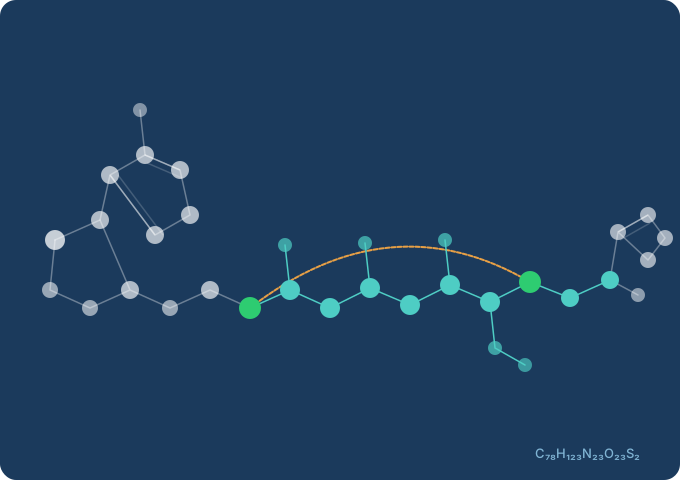
AOD-9604 was designed to isolate and harness the lipolytic properties of human growth hormone without triggering the growth-promoting or insulin-sensitizing effects of full-length hGH. By using only the fat-burning fragment of the GH molecule, the developers hoped to create a targeted metabolic compound free of hGH's broader side effects. The peptide contains a disulfide bridge between Cys7 and Cys15 which constrains its conformation and contributes to its metabolic selectivity. It was granted GRAS (Generally Recognized As Safe) status by the FDA in 2014 for use as a food ingredient, an unusual regulatory designation that is sometimes misrepresented as drug approval, which it is not.
Mechanism of Action
AOD-9604 stimulates lipolysis, the breakdown of stored fat, and inhibits lipogenesis, the conversion of dietary nutrients into new body fat, through a mechanism that does not involve the GH receptor or IGF-1 pathways. This independence from GH receptor signaling is the key differentiator from full-length growth hormone therapy. The precise receptor through which AOD-9604 acts remains incompletely characterized, which is one of the reasons its clinical development stalled. It appears to activate beta-3 adrenergic receptors in adipose tissue, particularly targeting visceral and abdominal fat deposits. Crucially it does not affect blood glucose, insulin sensitivity, or tissue growth, making it metabolically cleaner than hGH but also less potent.
Use Cases
Animal studies in rodents, pigs, and dogs consistently demonstrated fat reduction, particularly in obese subjects, with enhanced fat oxidation and reduced lipogenesis. These results were promising enough to advance to six human clinical trials. However the Phase IIb trial, the largest and most rigorous, failed to show statistically significant weight loss versus placebo in humans, which ended pharmaceutical development.
The biohacking community continues to use AOD-9604 for fat loss, particularly abdominal fat reduction, often stacked with other metabolic compounds. Emerging research into cartilage repair is arguably the more scientifically interesting current application, animal studies and some preliminary human data suggest AOD-9604 may support cartilage regeneration, particularly when combined with BPC-157. This application is earlier stage but has not been subject to the same failed clinical trial history as the fat loss indication.
It is important to note that the community evidence base for fat loss in humans is largely anecdotal and contradicts the controlled clinical trial data. PeptideClear presents both honestly.
Known Risks
AOD-9604 has a favorable safety profile based on clinical trial data, six trials in over 900 participants showed no significant adverse effects, no impact on glucose metabolism, and no growth-promoting effects. Injection site reactions are the most commonly reported side effect. The absence of IGF-1 stimulation is considered a meaningful safety advantage over full-length GH. Long-term safety data beyond clinical trial timeframes is limited. As with all research compounds purity and sourcing are significant variables. Not approved for human therapeutic use.
Available Forms
Available as a lyophilized sterile powder for reconstitution, typically supplied in vials of 2-5mg. Administered via subcutaneous injection. Oral formulations have been explored given the FDA GRAS designation for food use but injectable remains the standard in research contexts. Research compound only,not available through licensed pharmacies or with a prescription.
Regulatory Status
No FDA approval or approval from any major regulatory authority for any therapeutic indication. Granted FDA GRAS status in 2014 as a food ingredient, this applies to oral food use only and does not constitute drug approval. Pharmaceutical development was terminated in 2007 following failed Phase IIb trials. Available as a research compound only. Not available through licensed compounding pharmacies.
Sources
https://pubmed.ncbi.nlm.nih.gov/11713213/
https://pubmed.ncbi.nlm.nih.gov/11146367/
https://pubmed.ncbi.nlm.nih.gov/25208511/
Similar Compounds
Tesamorelin, BPC-157, CJC-1295, Ipamorelin