Recovery & Performance
CAS
77591-33-4
Molecular Weight
796
Da
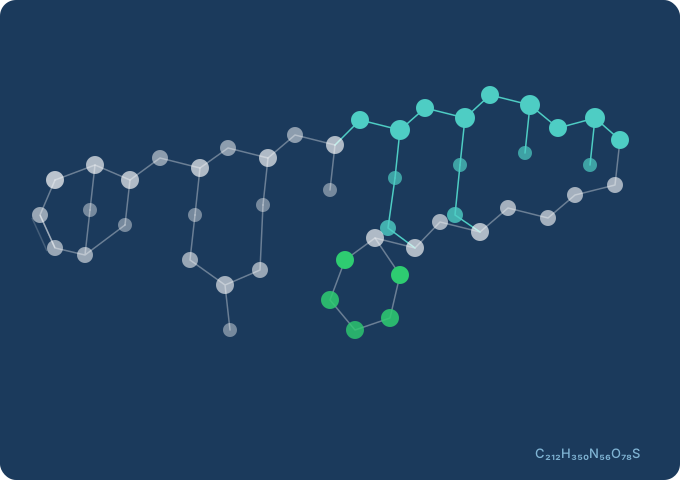
A synthetic peptide derived from Thymosin Beta-4, a protein naturally present in human cells. Studied in animal models for muscle and tendon repair, wound healing, and cardiac tissue recovery. Widely used alongside BPC-157 as a recovery stack in the biohacking community. No human clinical trials completed to date. Note: often confused with TB-500 Fragment — CAS 77591-33-4 confirms full Thymosin Beta-4.
Injectable
Intranasal Suitable
Uncertain
Research Compound
We break down one compound like this every week.
Subscribe free to The Honest Dose, and get the RQS Reference, every compound in the catalog scored on one page, as a welcome gift.
Community signal is substantial and skews positive for injury recovery applications, though not as dramatically as BPC-157. Tendon and ligament injury reports are the dominant use case discussed, users frequently stack TB-500 with BPC-157 for what they call synergistic healing effects. Systemic vs localized injection debate is active, with many users preferring systemic administration based on TB-500's mechanism. Hair growth as a side effect is reported frequently enough to have its own community discussion thread on r/tressless and r/Peptides. Side effect reports are notably rare. The animal-only evidence base generates the same tension as BPC-157, a large anecdotal positive signal against thin formal research.
TB-500 is a synthetic peptide derived from Thymosin Beta-4, a naturally occurring protein found in virtually all human and animal cells. It is one of the most abundant proteins in the body and plays a central role in cell building and repair. TB-500 specifically replicates the active region of Thymosin Beta-4 responsible for most of its regenerative properties.
TB-500 works primarily by up-regulating actin, a protein essential for cell structure, movement, and division. By promoting actin polymerization it accelerates cell migration to injury sites, stimulates new blood vessel formation, and reduces inflammation. It also modulates stem cell differentiation, which may contribute to its reported tissue repair properties across muscle, tendon, ligament, skin, and cardiac tissue.
In animal research TB-500 has been studied for muscle injury recovery, tendon and ligament repair, cardiac tissue healing following heart attack, wound healing, and hair regrowth. It is widely used alongside BPC-157 in the biohacking and athletic performance community as a recovery stack. Some limited human data exists from Thymosin Beta-4 clinical trials, though TB-500 itself has not been studied in human trials.
Human safety data is limited. Considerations include: no established safe human dosing range, unknown long-term effects, theoretical concern around cancer cell migration given its role in promoting cell movement, potential interaction with anticoagulants due to effects on platelet aggregation. Not recommended during pregnancy. As with BPC-157, individuals with a history of cancer should exercise significant caution given the peptide's pro-angiogenic and cell-migration-promoting properties.
Injectable (subcutaneous or intramuscular). No established oral form — TB-500 is a larger peptide and is generally considered to have poor oral bioavailability. Typically sold as a lyophilized powder requiring reconstitution with bacteriostatic water before injection.
TB-500 is not FDA approved for human use. Sold as a research compound labeled "not for human consumption." Not currently on any FDA compounding list. Legal to purchase and possess but not to administer as a drug without a prescription.
https://pubmed.ncbi.nlm.nih.gov/16099219/
https://pubmed.ncbi.nlm.nih.gov/15565145/
https://pubmed.ncbi.nlm.nih.gov/20536453/
Enjoyed this profile? Get one compound broken down in depth every week in The Honest Dose.
Last Reviewed