Longevity & Cellular Aging
CAS
305-84-0
Molecular Weight
226
Da
A naturally occurring dipeptide found in high concentrations in muscle and brain tissue, first discovered in 1900. Works through four distinct mechanisms — pH buffering during exercise, antioxidant activity, anti-glycation, and heavy metal chelation — making it one of the most versatile compounds in this catalog. Strong human RCT evidence for athletic endurance, skin anti-aging, cognitive protection, and blood sugar regulation. OTC, widely available, excellent safety profile with over 120 years of research history.
Oral
Intranasal Suitable
No
OTC Supplement
We break down one compound like this every week.
Subscribe free to The Honest Dose, and get the RQS Reference, every compound in the catalog scored on one page, as a welcome gift.
Community signal is moderately positive and spans multiple user profiles. Anti-aging, cognitive, and athletic performance users all discuss Carnosine for different reasons. r/Supplements and r/Longevity are the primary discussion venues. Cognitive benefits are reported more consistently than dramatic physical performance improvements. The community is generally aware that beta-alanine (a carnosine precursor) has stronger athletic performance evidence than Carnosine supplementation directly. AGE (advanced glycation end-product) inhibition is the longevity mechanism most commonly cited by informed community members. Responder variation is acknowledged, with some users reporting clear subjective benefit and others minimal effect.
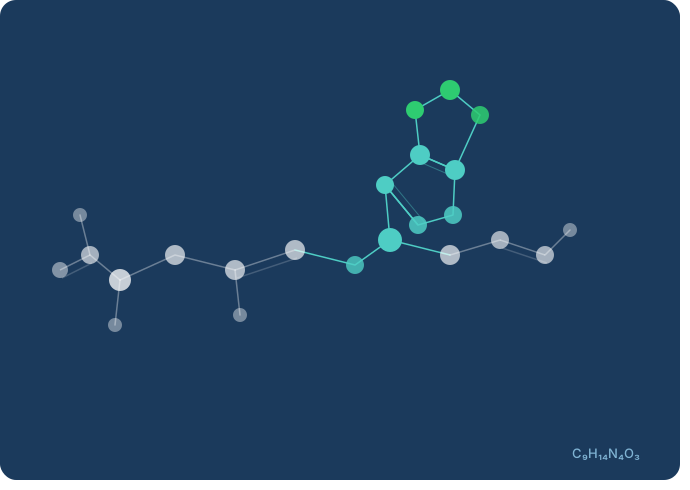
Carnosine is a naturally occurring dipeptide composed of two amino acids, beta-alanine and histidine, found in high concentrations in skeletal muscle, brain tissue, and the heart. It was first discovered by Russian scientist Vladimir Gulevich in 1900 making it one of the earliest identified peptides in biochemical research. Unlike the synthetic peptides in this catalog, carnosine is endogenous, produced naturally by the human body , and is also consumed through dietary sources, particularly meat and poultry. Muscle carnosine levels decline with age and are significantly higher in individuals who consume meat regularly compared to vegetarians and vegans. It has been studied across a remarkably wide range of applications from athletic performance to neuroprotection to anti-aging, making it one of the most versatile compounds in this catalog.
Carnosine works through several distinct mechanisms simultaneously. It is a potent pH buffer in muscle tissue, during high intensity exercise muscles produce lactic acid causing pH to drop, and carnosine neutralizes this acidification, delaying muscle fatigue and improving performance. It is also a powerful antioxidant and free radical scavenger, protecting cells from oxidative damage. Critically, carnosine inhibits glycation, the damaging process by which sugar molecules attach to proteins and DNA causing cellular aging and dysfunction. It also chelates (binds to) heavy metals including copper and zinc, preventing their accumulation in tissues. In the brain carnosine has demonstrated neuroprotective properties potentially relevant to neurodegenerative disease prevention.
Carnosine has human RCT evidence across multiple applications. In athletic performance it is well established for increasing muscle endurance and delaying fatigue during high intensity exercise — though most of this evidence is for beta-alanine supplementation which raises muscle carnosine levels indirectly. Direct carnosine supplementation has shown benefits for skin aging through anti-glycation effects, cognitive function and neuroprotection, blood sugar regulation and reduction of glycation end products in diabetic individuals, and eye health particularly in the form of N-acetylcarnosine eye drops for cataracts. It is one of the most evidence-rich OTC compounds in the longevity and anti-aging space.
Carnosine has an excellent safety profile with decades of research and widespread use supporting its tolerability. No serious adverse effects have been reported at standard supplementation doses. Some individuals report a tingling sensation (paresthesia) particularly when taking beta-alanine — a carnosine precursor — though this is less common with direct carnosine supplementation. Individuals with histidine metabolism disorders should consult a physician before supplementing. As with all supplements quality and sourcing vary between brands. Suitable for most populations including older adults though as with all supplements pregnant women should consult a healthcare provider.
Oral capsules and tablets (most common), powder, and topical formulations for skin care applications. N-acetylcarnosine eye drops are available OTC for ocular applications. Carnosine is also naturally present in meat and poultry — beef, chicken, and pork are among the richest dietary sources. Vegetarians and vegans have significantly lower muscle carnosine levels and may benefit most from supplementation.
OTC dietary supplement. No prescription required. Regulated under DSHEA as a dietary supplement in the United States. Widely available through health food stores, supplement retailers, and online. One of the safest and most accessible compounds in this catalog with a research history spanning over 120 years.
https://pubmed.ncbi.nlm.nih.gov/20017611/
https://pubmed.ncbi.nlm.nih.gov/22270875/
https://pubmed.ncbi.nlm.nih.gov/19595386/
Enjoyed this profile? Get one compound broken down in depth every week in The Honest Dose.
Last Reviewed