Metabolic
CAS
2805997-46-8
Molecular Weight
4400
Da
Survodutide (BI 456906) is a dual glucagon/GLP-1 receptor agonist developed by Boehringer Ingelheim. It is currently in Phase II/III clinical trials for obesity and non-alcoholic steatohepatitis (NASH/MASH). Unlike tirzepatide (GIP/GLP-1) and retatrutide (GIP/GLP-1/glucagon), survodutide combines GLP-1 and glucagon receptor activation, a mechanism that targets both appetite and hepatic fat metabolism. Phase II results showed meaningful weight loss; Phase III is ongoing. Not yet approved.
Injectable
Intranasal Suitable
No
Emerging / Clinical Trial
We break down one compound like this every week.
Subscribe free to The Honest Dose, and get the RQS Reference, every compound in the catalog scored on one page, as a welcome gift.
Survodutide has generated moderate interest in metabolic health and GLP-1 forums, primarily from users tracking the next wave of obesity drugs beyond tirzepatide. Community awareness is lower than retatrutide, partly because survodutide's development timeline has been less publicly prominent. Interest has increased following MASH trial data, as liver metabolic disease is an unmet need that GLP-1-only agents don't target as specifically. Minimal discussion in peptide research communities, positioned firmly as a pharmaceutical-track drug rather than a research peptide, keeping it out of most grey-market discussion.
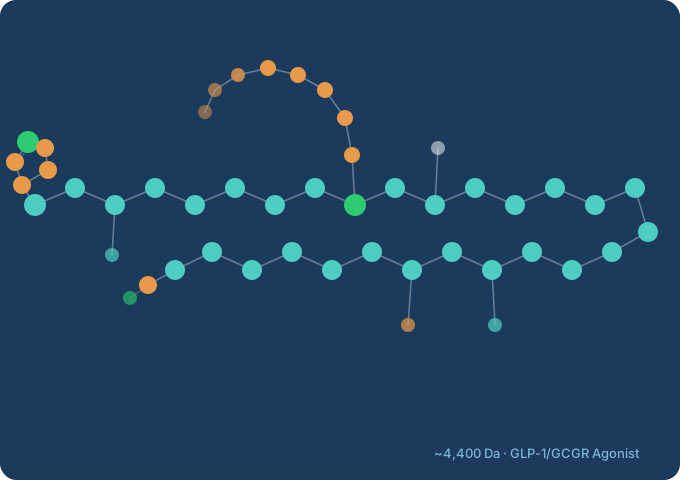
Survodutide is a fatty-acid-conjugated peptide developed through collaboration between Boehringer Ingelheim and Zealand Pharma. It is a co-agonist at the GLP-1 receptor and the glucagon receptor (GCGR). The glucagon component is intended to drive hepatic fat oxidation and energy expenditure, while the GLP-1 component suppresses appetite. The dual mechanism is particularly relevant for metabolic liver disease (MASH), where hepatic fat metabolism is a primary target. Survodutide is administered once weekly by subcutaneous injection.
Survodutide activates both GLP-1 receptors (suppressing appetite and slowing gastric emptying) and glucagon receptors (stimulating hepatic fat breakdown and increasing energy expenditure). Glucagon receptor agonism is a distinguishing feature from most GLP-1-class agents, glucagon typically raises blood glucose, but when balanced with GLP-1 activity, the net effect in trials has been weight loss without significant hyperglycemia. This dual action may produce a more favorable effect on hepatic steatosis than GLP-1 agonism alone, which is the rationale for the MASH program.
Survodutide is being investigated for obesity and MASH (metabolic dysfunction-associated steatohepatitis). Phase II data in obesity showed approximately 14.9% weight loss at 46 weeks (2.4 mg dose). A separate Phase II/III program in MASH showed histological improvement in liver fibrosis. It is not approved for any use as of July 2026 and is not available outside clinical trial settings.
The adverse effect profile mirrors GLP-1-class agents: nausea, vomiting, diarrhea, and decreased appetite are the most common. Glucagon receptor co-agonism introduces the theoretical risk of hyperglycemia, though this has been limited in trials by the balancing GLP-1 effect. Elevation of liver enzymes and lipase has been observed in some participants. Long-term cardiovascular outcomes have not been characterized. No approved label exists.
Survodutide is administered as a once-weekly subcutaneous injection in clinical trial settings. It is not commercially available and cannot be legally obtained outside a registered trial. Research chemical vendors may offer unauthorized preparations, but these carry unverifiable purity and safety risks for a compound without established human safety data outside controlled trials. It is formulated similarly to other weekly GLP-1-class injectables (pre-filled pen anticipated for commercial launch if approved).
Survodutide has not received FDA approval for any indication, but it holds FDA Breakthrough Therapy designation for MASH with moderate or advanced fibrosis (granted September 2024). Its Phase 3 program has begun reading out: the SYNCHRONIZE-1 obesity trial reported positive results in April 2026 (up to 16.6% weight loss at 76 weeks), and SYNCHRONIZE-MASLD also met its endpoints, with full results published in The New England Journal of Medicine and Nature Medicine in mid-2026. The LIVERAGE and LIVERAGE-Cirrhosis trials in MASH are ongoing. Boehringer Ingelheim has not yet announced a US regulatory submission. Survodutide is not on the FDA 503A compounding list and cannot be prescribed or compounded in the US; an NDA filing would be anticipated once the Phase 3 program is complete.
Enjoyed this profile? Get one compound broken down in depth every week in The Honest Dose.
Last Reviewed