Nootropics & Neuroprotection
CAS
80714-61-0
Molecular Weight
814
Da
A synthetic heptapeptide derived from the 4-7 fragment of adrenocorticotropic hormone (ACTH), with a stabilizing Pro-Gly-Pro tail added at the C-terminus. Developed in the 1980s at the Institute of Molecular Genetics of the Russian Academy of Sciences. Registered as a prescription medicine in Russia for ischemic stroke and optic nerve disorders, and included on Russia's List of Vital and Essential Drugs. Widely used in the nootropic and biohacking community for cognitive enhancement, neuroprotection, and focus. The full mechanism of action remains incompletely characterized. Research compound in all Western markets with no FDA or EMA approval.
Nasal · Injectable
Intranasal Suitable
Yes
Research Compound
We break down one compound like this every week.
Subscribe free to The Honest Dose, and get the RQS Reference, every compound in the catalog scored on one page, as a welcome gift.
Community signal is enthusiastic but geographically concentrated, Semax has a stronger user base in Eastern Europe where it's been used clinically, and Western biohacking reports are comparatively thinner. Cognitive enhancement reports dominate: focus, verbal fluency, and motivation are the most frequently cited effects. Onset is described as relatively fast, many users report noticing effects within days rather than weeks. Intranasal administration is nearly universal in community discussion. Mood elevation and anxiolytic effects are reported alongside cognitive benefits. The Russian clinical literature is known within the community, and users are generally aware that the evidence base is geographically concentrated. Sourcing quality is flagged as a significant confounding variable in negative reports.
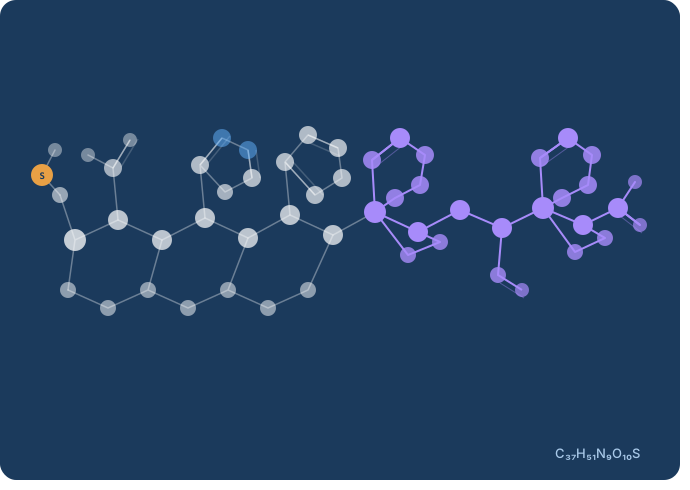
Semax (sequence: Met-Glu-His-Phe-Pro-Gly-Pro) was engineered by attaching a Pro-Gly-Pro stabilizing tail to the ACTH 4-7 tetrapeptide, the melanocortin core of adrenocorticotropic hormone. The parent ACTH 4-7 fragment is biologically interesting but pharmacologically impractical, surviving in plasma for only seconds before being cleaved by peptidases. The Pro-Gly-Pro tail blocks these enzymes and provides enough residence time for nose-to-brain transport, receptor engagement, and downstream gene expression effects including BDNF upregulation. This single structural modification transforms a pharmacologically useless fragment into a viable neuropeptide therapeutic, a design approach that makes Semax one of the more elegant examples of peptide engineering in this catalog. It has been studied in Russia for over three decades and is one of the most extensively researched nootropic peptides in existence, though most of that research exists in Russian-language literature that is difficult to access and evaluate by Western standards.
The precise mechanism of Semax remains incompletely characterized, an unusual and important caveat for a compound with this much research behind it. What is established: Semax stimulates the synthesis and release of Brain-Derived Neurotrophic Factor (BDNF) in the basal forebrain following intranasal application, with BDNF levels increasing significantly within 3 hours of administration. BDNF is a critical modulator of synaptic plasticity, neuronal survival, and memory consolidation, making BDNF upregulation a plausible explanation for Semax's observed cognitive effects. Semax may also interact with melanocortin receptors and inhibit enkephalinase enzymes that break down endogenous opioid peptides, though these pathways remain under investigation. Genome-wide transcriptional analysis in rat stroke models showed Semax modulates over 1,500 genes, enhancing neurotrophic factor expression, suppressing inflammatory gene expression, and activating neurotransmitter-related genes. The breadth of this genomic effect suggests a mechanism more complex than simple receptor agonism.
Semax's most validated application is neuroprotection in acute ischemic stroke, where it is used clinically in Russia as an adjunct therapy. Russian clinical data, the primary evidence base, supports improvements in neurological recovery, reduced infarct size, and faster rehabilitation outcomes. These findings have not been replicated in Western randomized controlled trials.
In the nootropic community Semax is used primarily for cognitive enhancement, improved focus, working memory, learning capacity, and mental clarity. Observational reports are consistent and numerous but controlled human data from independent research groups outside Russia is largely absent.
Emerging research into Alzheimer's disease is scientifically compelling, Semax has demonstrated interference with amyloid-beta aggregation in membrane models, suggesting potential relevance to neurodegeneration. This research is preliminary and in vitro only.
Semax has also been studied for optic nerve atrophy, anxiety reduction, and as a neuroprotective agent in high-cognitive-demand contexts. All applications outside the Russian stroke indication should be considered observational.
Semax has a favorable tolerability profile based on decades of Russian clinical use and community observational data. The most commonly reported side effects are mild, nasal irritation from intranasal administration, transient headache, and occasional irritability or overstimulation, particularly at higher doses. No significant hormonal effects have been documented. The incomplete characterization of its mechanism means long-term effects are not fully understood. Quality control is a meaningful concern given that most Western supply comes through research compound channels without pharmaceutical-grade manufacturing standards. As with all Russian-developed peptides, the evidence base carries additional uncertainty due to limited access to and peer review of the primary literature.
Available in two primary forms. Nasal drops are the most common administration route, the intranasal delivery pathway allows direct nose-to-brain transport bypassing the blood-brain barrier, which is considered central to Semax's CNS activity. Subcutaneous injectable form is also available for research use. In Russia, Semax is manufactured by Peptogen as registered nasal drops at 0.1% and 1% concentrations. Western research compound supply is lyophilized powder requiring reconstitution. Research compound only outside Russia.
Prescription medicine registered in Russia for ischemic stroke and optic nerve disorders, and included on Russia's List of Vital and Essential Drugs. Not approved by the FDA, EMA, or any other major Western regulatory authority. On July 24, 2026 the FDA's Pharmacy Compounding Advisory Committee voted 8 to 5 to recommend adding Semax to the US Section 503A Bulks List, which would let licensed compounding pharmacies prepare it by prescription. That vote is advisory and non-binding, and formal FDA rulemaking, typically many months, would still have to be completed first, so Semax is not yet available through licensed US compounding pharmacies and is still sold as a research compound in Western markets. Regulatory status varies internationally.
https://pubmed.ncbi.nlm.nih.gov/16635254/
https://pubmed.ncbi.nlm.nih.gov/24661604/
https://pubmed.ncbi.nlm.nih.gov/34201112/
https://pubmed.ncbi.nlm.nih.gov/35080861/
Enjoyed this profile? Get one compound broken down in depth every week in The Honest Dose.
Last Reviewed