Skin & Hair
CAS
9007-34-5
Molecular Weight
300000
Da
The second most abundant collagen in the body, found alongside Type I in skin, blood vessels, and internal organs. Almost always consumed as part of a Type I and III bovine collagen blend. Supports skin firmness, vascular integrity, and gut lining health. Strong safety profile and widely available OTC. Less independently studied than Type I but shares a robust combined evidence base.
Oral · Powder
Intranasal Suitable
No
OTC Supplement
We break down one compound like this every week.
Subscribe free to The Honest Dose, and get the RQS Reference, every compound in the catalog scored on one page, as a welcome gift.
Community signal is less distinct than Type I because most commercial collagen products combine both types, making isolated Type III experiences rare. Users who specifically seek Type III typically do so for skin elasticity and wound healing rather than joint applications. The community generally treats Type I and III as complementary rather than interchangeable. Standalone Type III anecdotes are sparse on Reddit and biohacking forums, most signal comes from combination product users attributing benefits they can't isolate to one type specifically.
Collagen Type III is the second most abundant collagen in the human body, found predominantly in skin, blood vessels, and internal organs including the intestinal wall and uterus. It is often described as the "softer" collagen, it forms a more flexible fibrillar network compared to the rigid structural framework of Collagen Type I. In the body Types I and III are almost always found together, which is why most collagen supplements contain both. Type III is particularly concentrated in fetal tissue and early wound healing, where it forms the initial scaffolding that is later replaced by Type I collagen as healing matures. It is produced by the same fibroblast cells responsible for Type I synthesis.
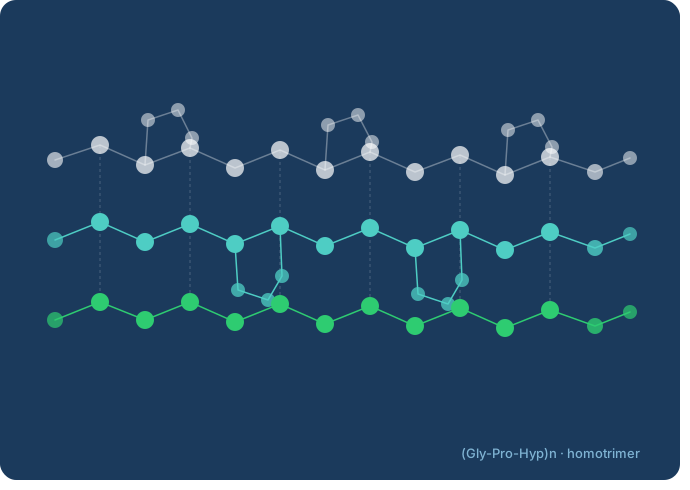
Like Collagen Type I, supplemental Collagen Type III is hydrolyzed into small peptide fragments and amino acids, primarily glycine, proline, and hydroxyproline, that are absorbed in the digestive tract and transported to target tissues. These fragments signal fibroblasts to up regulate collagen synthesis. Type III collagen peptides specifically appear to support the structural integrity of blood vessel walls and the extracellular matrix of soft tissues. The presence of Type III alongside Type I in supplements is thought to more closely replicate the body's natural collagen ratios, potentially improving outcomes for skin and vascular applications.
Collagen Type III is used primarily for skin firmness and elasticity, cardiovascular support through maintenance of blood vessel wall integrity, gut lining support, and wound healing. It is rarely taken as a standalone supplement, most users consume it as part of a Type I and III blend, which represents the most common format for bovine collagen supplements. Research on Type III specifically is less extensive than Type I but the combined evidence base for blended collagen supplements is robust.
Safety profile is identical to Collagen Type I, excellent tolerability with no serious adverse effects reported in clinical literature. Same allergy considerations apply, individuals with beef allergies should avoid bovine-sourced Type III collagen. Note that marine collagen is predominantly Type I and is not a significant source of Type III, consumers specifically seeking Type III should look for bovine sourced products. Not suitable for vegans.
Oral powder and capsules, almost always in combination with Collagen Type I as a blended bovine collagen supplement. Standalone Type III collagen supplements exist but are less common. Bovine hide and bone broth are the primary commercial sources. As with Type I, topical application is considered less effective than oral supplementation.
OTC dietary supplement. No prescription required. Regulated under DSHEA as a food ingredient. Widely available through mainstream retail and online channels.
https://pubmed.ncbi.nlm.nih.gov/29144022/
https://pmc.ncbi.nlm.nih.gov/articles/PMC6891674/
https://pmc.ncbi.nlm.nih.gov/articles/PMC10180699/
Enjoyed this profile? Get one compound broken down in depth every week in The Honest Dose.
Last Reviewed