Growth Hormone
CAS
86168-78-7
Molecular Weight
3358
Da
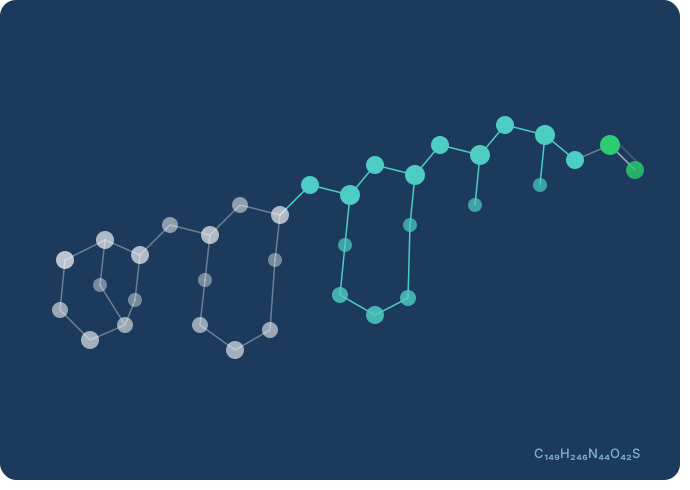
A synthetic analog of the body's natural Growth Hormone Releasing Hormone (GHRH), comprising its first 29 amino acids. The only peptide in this catalog with prior FDA approval history, previously prescribed for pediatric growth hormone deficiency. Currently available through licensed compounding pharmacies by prescription. Stimulates the pituitary to produce growth hormone naturally, maintaining the body's own regulatory feedback mechanisms.
Injectable
Intranasal Suitable
Uncertain
Prescription
We break down one compound like this every week.
Subscribe free to The Honest Dose, and get the RQS Reference, every compound in the catalog scored on one page, as a welcome gift.
Community signal is moderate and clinically inflected. Sermorelin's history as a legitimate pharmaceutical gives it a different user profile than research peptides. Many anecdotal reports come from anti-aging clinic patients rather than grey market users, which skews the signal toward supervised use. Sleep quality improvements are reported consistently, often described before body composition changes. GH pulse restoration in older users is the primary framing in community discussion. Tolerance development over extended cycles is flagged by experienced users, with cyclical protocols commonly recommended. The compounding pharmacy community has a significant body of Sermorelin discussion given its prescribable status in the US.
Sermorelin is a synthetic analog of Growth Hormone Releasing Hormone (GHRH), comprising the first 29 amino acids of the naturally occurring 44 amino acid GHRH peptide. It was the first GHRH analog approved by the FDA for clinical use in children with growth hormone deficiency, giving it a stronger regulatory and clinical history than most peptides in this space. It stimulates the pituitary gland to produce and secrete growth hormone naturally rather than introducing exogenous GH directly.
Sermorelin binds to GHRH receptors in the anterior pituitary gland, triggering the natural synthesis and pulsatile release of growth hormone. Because it works through the body's own regulatory feedback mechanisms, GH release remains subject to natural inhibitory controls — primarily somatostatin — which reduces the risk of GH excess compared to direct GH administration. This self-regulating mechanism is considered one of Sermorelin's key safety advantages over synthetic HGH.
Sermorelin is used clinically for adult growth hormone deficiency and has been studied for age-related GH decline, body composition improvement, increased lean muscle mass, fat reduction, improved sleep quality, enhanced recovery, and general anti-aging protocols. It is one of the most prescribed peptides through legitimate telehealth and longevity medicine channels due to its established clinical history and prescription pathway.
As one of the more clinically established peptides, Sermorelin's risk profile is better understood than most in this space. Known side effects include injection site reactions, flushing, headache, dizziness, and hyperactivity. Long-term stimulation of GH release carries theoretical risks similar to those associated with elevated GH, including potential effects on insulin sensitivity and theoretical cancer growth concerns. Contraindicated in individuals with active malignancies. Not recommended during pregnancy. Should be used under physician supervision given its prescription status.
Injectable (subcutaneous). Prescribed and dispensed through licensed compounding pharmacies as a lyophilized powder requiring reconstitution with bacteriostatic water. No established oral form with meaningful bioavailability.
Sermorelin has FDA approval history — it was previously approved as Geref for pediatric GH deficiency before being voluntarily withdrawn from the market for commercial reasons in 2008. It is currently available through licensed compounding pharmacies as a prescription compound under 503A regulations. This makes it one of the most accessible peptides through legitimate clinical channels and a strong candidate for PeptideClear's Phase 3 telehealth referral pathway.
https://pubmed.ncbi.nlm.nih.gov/18046908/
https://pmc.ncbi.nlm.nih.gov/articles/PMC2699646/
https://pubmed.ncbi.nlm.nih.gov/18031173/
https://pubmed.ncbi.nlm.nih.gov/8491152/
Enjoyed this profile? Get one compound broken down in depth every week in The Honest Dose.
Last Reviewed